Best Battery Pack Options for Global Buyers?
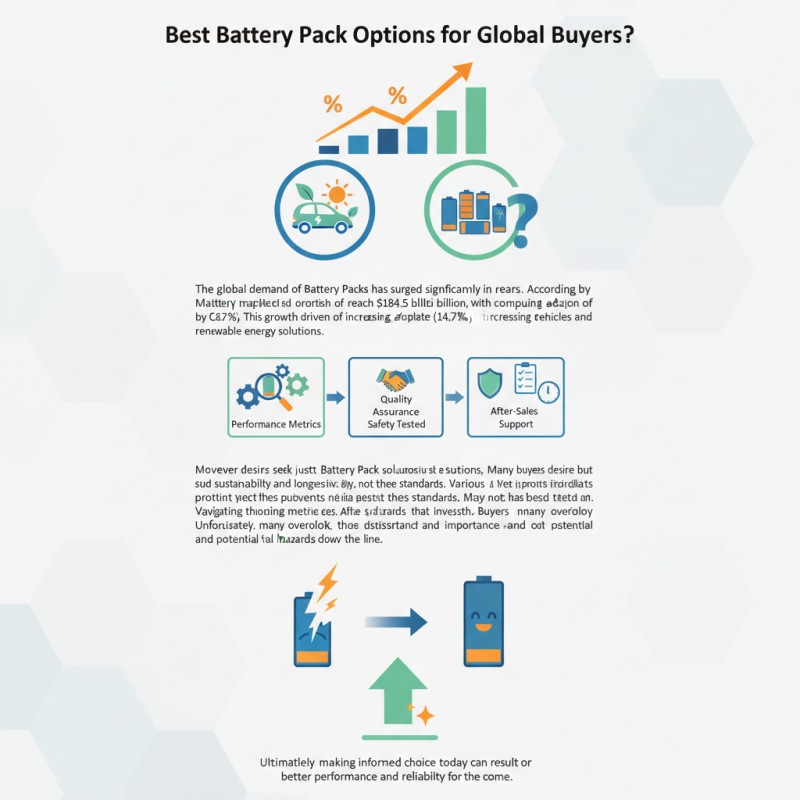
The global demand for Battery Packs has surged significantly in recent years. According to a report by MarketsandMarkets, the global battery market is projected to reach $184.5 billion by 2027, with a compound annual growth rate (CAGR) of 14.7%. This growth is largely driven by the increasing adoption of electric vehicles and renewable energy solutions.
As consumers seek efficient and reliable power solutions, the variety of Battery Pack options can be overwhelming. Many buyers desire not just performance but also sustainability and longevity. However, not all products meet these standards. Various reports indicate that a substantial portion of the Battery Packs available may not have been tested for performance and safety, raising concerns for end-users.
Navigating through these options requires careful consideration and awareness of performance metrics. Buyers must prioritize brands that invest in research and quality assurance. Unfortunately, many overlook the importance of warranty and after-sales support. This oversight can lead to dissatisfaction and potential hazards down the line. Ultimately, making an informed choice today can result in better performance and reliability for years to come.
Understanding Different Types of Battery Packs Available Globally
Battery packs vary widely in type and usage. Understanding their different forms is crucial for informed purchasing decisions. For example, lithium-ion packs are popular for portable electronics. They offer high energy density but can heat up if not managed properly. Users should consider safety features in any battery pack they choose.
Another type is lead-acid batteries, often used in vehicles and renewable energy systems. They are heavier and less efficient compared to lithium-ion variants. However, they are known for reliability and affordability. Their longer lifespan makes them appealing despite their weight.
There are also emerging technologies like solid-state batteries, which promise enhanced safety and efficiency. Yet, these are not widely available yet. This shows the current market still needs improvement. Consumers should research and learn about various options before making a decision. Balancing power needs with safety is essential in selecting the right battery pack.
Key Factors to Consider When Choosing a Battery Pack
When selecting a battery pack, several key factors should be prioritized. Capacity is a primary concern. A battery pack with higher capacity provides longer usage times. According to the Global Battery Alliance, the average consumer battery pack should range from 10,000mAh to 20,000mAh for optimal utility.
Weight and portability also matter. Many consumers prefer lightweight options, particularly for travel. However, lighter packs often compromise capacity. A balance must be struck. Also, the charge rate affects user experience. Fast charging capabilities can significantly reduce downtime, increasing convenience for users. Reports indicate that a 15W charging speed increases efficiency for on-the-go users.
Durability and safety features cannot be overlooked. Battery safety is a growing concern, with consistent reports of overheating incidents. Choosing packs with built-in protection mechanisms remains crucial. Certification from reputable industry standards can enhance purchasing confidence.
It can be challenging to find a balance between cost and reliability, and cheaper options may lack these essential safety features. Buyers should thoroughly research and consider these factors to make informed decisions.
Top Brands and Their Popular Battery Pack Models for Buyers
When exploring battery pack options, many brands stand out for their reliability and performance. Each brand offers unique models catering to different needs, such as portability, charging speed, and capacity. Some popular models focus on lightweight designs, making them ideal for travelers. Others emphasize high capacity for extensive power requirements.
Users often report mixed experiences. Some battery packs excel in quick charging times but may lack durability. Others have a solid build yet fall short in performance. It's important to consider your usage scenario before making a purchase. Many buyers appreciate models with multiple ports, enabling simultaneous device charging. However, some complain about the weight, which can be a drawback when carrying multiple items.
Price is another factor to weigh. Premium brands come with high costs but often offer superior performance. On the other hand, budget-friendly options may require trade-offs in features. Researching user reviews can provide valuable insight into real-life performance and longevity. Buyers should remain aware of their specific needs and preferences when choosing a battery pack.
Comparative Analysis of Battery Pack Performance and Features
In the evolving landscape of battery packs, performance and features vary significantly. Recent studies indicate that energy density is a key factor in determining overall efficiency. Reports show that lithium-ion batteries, widely used today, offer up to 250 Wh/kg. This makes them suitable for various applications, from portable devices to electric vehicles.
However, the capacity can differ across models. Some battery packs may provide fast charging capabilities. This feature promotes convenience but often compromises overall lifespan. For example, rapid charging might reduce the cycle life to 500 cycles from 1,000 cycles. Users must weigh the trade-offs between speed and longevity.
Comparative analyses reveal that weight also plays a critical role. Heavier packs may indicate more durable construction, which can enhance performance. However, increased weight may hinder usability in portable devices. Consumers should consider their specific needs. Understanding these dynamics helps in making informed decisions. While promising advancements exist, further innovation is essential to address these challenges.
Battery Pack Performance Comparison
Tips for Maintaining and Maximizing the Lifespan of Battery Packs
Battery packs are essential for portable devices. Proper care can extend their lifespan. Here are some tips to maximize your battery pack’s efficiency.
Temperature plays a crucial role in battery health. Keep your battery within a moderate range. Extreme heat can damage internal components. Similarly, extreme cold can reduce performance. Storing your battery in a climate-controlled environment is ideal.
Regular charging habits matter too. Avoid letting your battery drop to zero. Charge it when it reaches around 20%. Quick charges can be convenient but may generate heat, so use them sparingly. Over time, you may notice that your battery doesn’t hold a charge as well. This is common as batteries age. Regular monitoring is essential.
It’s also vital to clean the terminals. Dust and grime can cause poor connections. A simple wipe with a dry cloth can make a difference. Reflect on your own usage patterns. Analyzing your charging habits could reveal opportunities for improvement.
Best Battery Pack Options for Global Buyers? - Tips for Maintaining and Maximizing the Lifespan of Battery Packs
| Battery Type | Capacity (mAh) | Weight (grams) | Dimensions (mm) | Charging Time (hours) | Lifespan (cycles) |
| Lithium-ion | 20000 | 450 | 150 x 75 x 20 | 4 | 500 |
| Lithium Polymer | 10000 | 300 | 120 x 70 x 10 | 5 | 400 |
| Nickel-Metal Hydride | 7000 | 500 | 140 x 60 x 15 | 6 | 300 |
| Lead Acid | 12000 | 1300 | 200 x 150 x 100 | 8 | 200 |