Best Emergency Battery Options for Reliable Backup Power?
In today’s unpredictable world, having a reliable emergency battery is crucial for preparedness. According to recent industry reports, over 60% of households experience at least one power outage annually. Such disruptions highlight the need for dependable backup power solutions. An emergency battery can provide immediate power for essential devices, making it an indispensable tool during unforeseen circumstances.
Experts indicate that choosing the right emergency battery involves understanding specific needs. Factors such as capacity, charging time, and portability play significant roles. Popular models offer varying features, but careful research ensures optimal choices. However, many consumers overlook important specifications. For example, a battery’s output may not support high-wattage appliances, causing frustration when the situation arises.
Finding the best emergency battery can be a daunting task. Users often face overhyped marketing claims that lead to poor decisions. It’s essential to balance brand reputation with performance evaluations. Consumers should seek reviews and guidelines from credible sources. With proper information, individuals can confidently select an emergency battery that truly ensures peace of mind even in dire situations.

Top Features to Consider in Emergency Backup Batteries
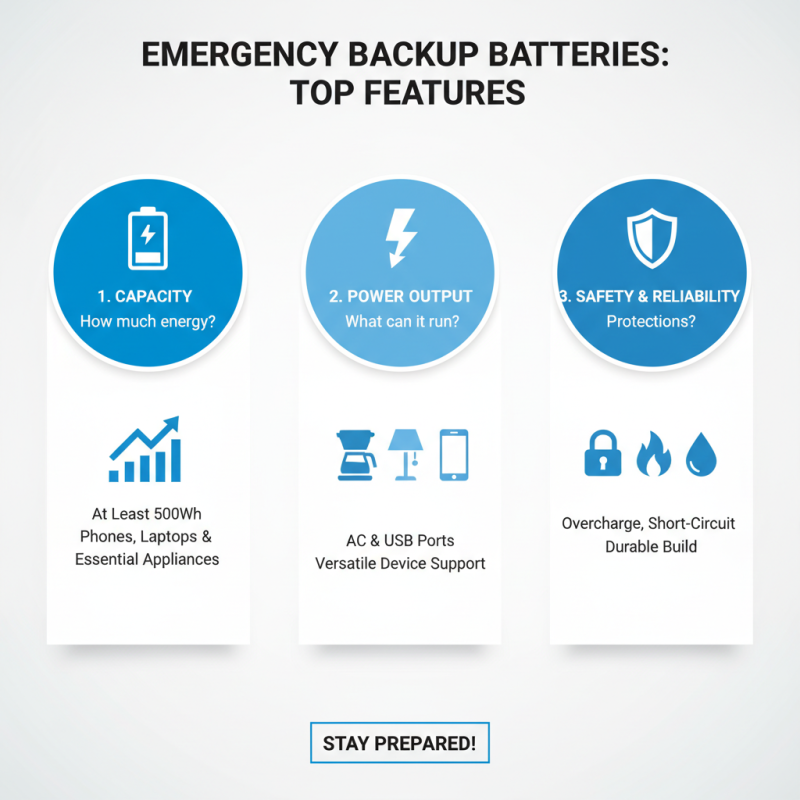
When considering an emergency battery, several key features come into play. Battery capacity is crucial. Look for options that can store enough energy to meet your needs during a power outage. A battery with at least 500Wh is ideal for charging devices and running essential appliances.
Portability also matters. Choose a lightweight and compact design that is easy to transport. This is especially useful if you need backup power during emergencies away from home. Some batteries come with built-in handles, making them even more convenient for outdoor scenarios.
Tips to remember: Always check charging times and the number of ports available. Multiple ports ensure you can power several devices simultaneously. Battery life is another factor. A good emergency battery should last through several cycles without degrading quickly. Even with well-designed batteries, it’s essential to test them regularly to ensure they perform when you really need them. Taking time to understand these features can lead to a more reliable backup power solution.
Types of Emergency Batteries: Comparing Lithium-Ion, Lead-Acid, and More
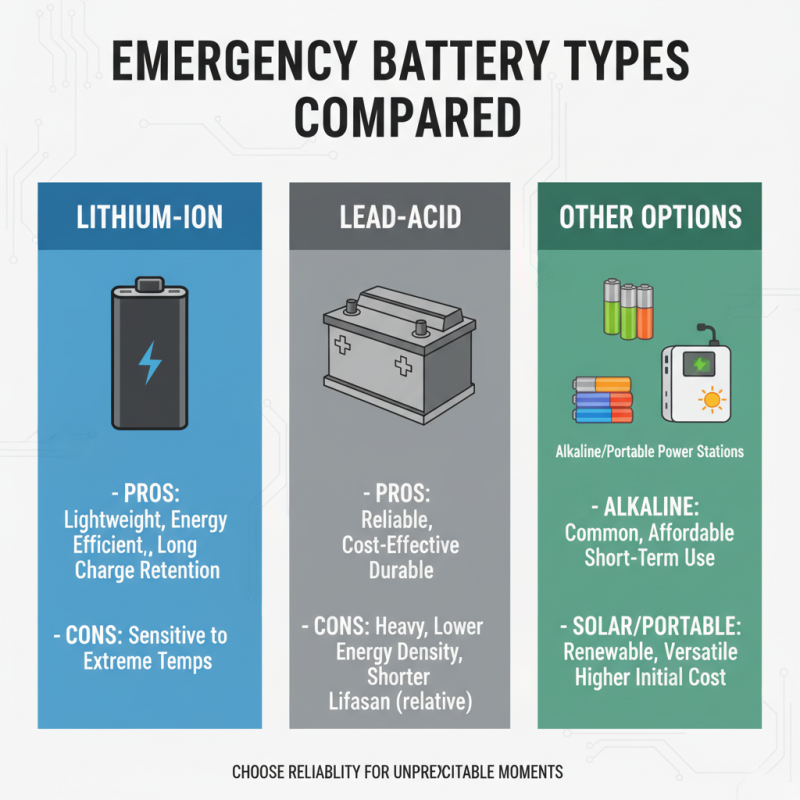
When choosing an emergency battery, it's essential to compare different types. Lithium-ion batteries are popular for their lightweight design and energy efficiency. They can hold a charge for longer periods, making them ideal for emergencies. However, their vulnerability to extreme temperatures can be a drawback.
Lead-acid batteries are another option. They are well-known for their robustness and affordability. Their reliability makes them a common choice for backup power systems. Yet, they can be bulky and heavy, which might limit portability. Maintenance is another aspect to consider, as these batteries often require regular checks.
Other types, like nickel-cadmium and saltwater batteries, come with their own advantages. Nickel-cadmium batteries are durable and perform well in various temperatures. On the downside, they have a shorter lifespan. Saltwater batteries are environmentally friendly but generally less efficient. Each battery type has pros and cons, requiring careful consideration based on individual needs and situations.
Best Emergency Battery Brands and Their Most Reliable Models
When it comes to emergency battery options, reliability is key. Many brands specialize in providing high-quality backup power solutions. These brands have established a reputation for durability and efficiency. Models vary in features, capacity, and performance. A reliable battery should meet your specific needs, be it for home use or outdoor adventures.
Tips: Always consider battery capacity before making a purchase. A higher capacity leads to longer usage times, but it often means a larger size. Keep in mind that portability is essential. Some users prefer lightweight models for ease of transport.
Look for batteries with advanced safety features. This can greatly reduce the risk of malfunctions. Many models offer overcharge protection and temperature controls. These features ensure that the battery operates reliably in various conditions.
Ultimately, ensuring your emergency power solution is dependable is crucial. Choose brands that are known for rigorous testing and customer satisfaction. A little research can go a long way in finding the right model tailored to your expectations. Consider user reviews for real-world insights. They often highlight strengths and weaknesses that specs can’t convey.
How to Determine the Right Capacity for Your Power Needs
When considering the right capacity for your emergency battery, think carefully about your power needs. Evaluate the devices you rely on. A smartphone may need around 10,000 mAh, while a laptop requires significantly more. Reports indicate that an average household may consume 30-50% of its energy during a crisis.
Calculate the total wattage of your essential devices. Multiply the wattage by the hours you expect to use them. This will give you a clearer picture of required battery capacity. Consider a buffer. Having a surplus ensures your battery can manage unexpected demands.
Tips: Assess your power consumption regularly. Devices can consume more power than expected.
In another case, consider the environmental factors. Temperature fluctuations can affect battery efficiency. An emergency battery may lose capacity when exposed to extreme weather. Invest in a battery with temperature regulation features.
Ultimately, choosing the right capacity requires careful thought. A little reflection on your power habits can lead to smarter choices. Trust that a well-considered plan will ensure you remain powered during emergencies.
Tips for Maintaining and Storing Emergency Batteries Properly
Maintaining and storing emergency batteries properly is crucial for their longevity and reliability. According to industry data, improper storage can reduce battery life by 30%. Batteries should be kept in a cool, dry place. Extreme temperatures can cause damage. Ideal storage temperatures range from 50°F to 77°F.
It's essential to check batteries for corrosion or leaks regularly. A straightforward visual inspection can prevent potentially hazardous situations. A study found that nearly 20% of batteries fail due to neglecting these checks. Additionally, labeling batteries with purchase dates helps track their lifespan. This practice can ensure that older batteries are used first.
Consider recharging batteries periodically. Lithium-ion batteries, for example, retain their optimal performance when charged to around 50%. Waiting until they are fully depleted can be detrimental. Regular upkeep and monitoring pave the way for dependable backup power when emergencies strike. Always be mindful and cautious with stored batteries to enhance both safety and function.