Best UPS Systems for Reliable Power Backup Solutions?
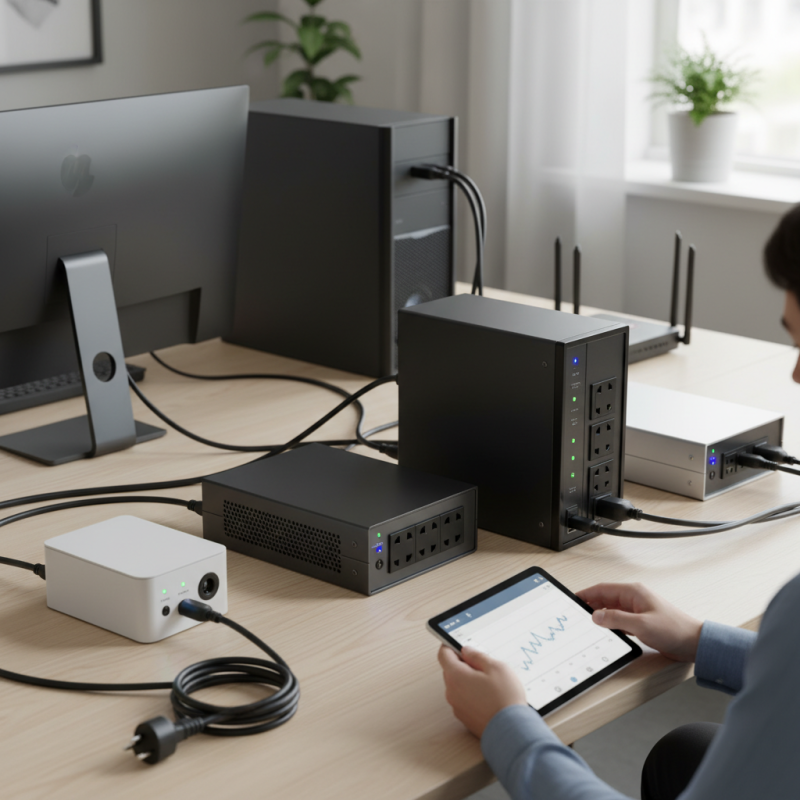
In today's world, power outages can occur unexpectedly. A reliable UPS system is crucial for maintaining essential functions during these events. Whether you are a home user or a business professional, investing in a quality UPS system can save you from potential data loss and equipment damage.
Selecting the best UPS system involves understanding your specific needs. Different systems offer various capacities and features. Some are designed for sensitive electronics, while others cater to larger devices. The choices can be overwhelming, and it's easy to make mistakes if you are not informed.
Expert opinions emphasize the importance of evaluating power requirements carefully. It's essential to choose a UPS that suits your hardware's needs without overspending. Not all UPS systems are created equal; some may not provide adequate backup time during outages. Taking the time to research can lead to better protection and peace of mind.
Types of UPS Systems for Different Power Needs
When considering power backup solutions, understanding different types of UPS (Uninterruptible Power Supply) systems is essential. There are primarily three types of UPS systems: standby, line-interactive, and double-conversion. Each type serves distinct needs based on varying power demands.
Standby UPS systems are cost-effective but provide limited protection. They are ideal for home users or small offices with minimal power interruptions. According to a recent industry report, about 40% of users select standby systems due to budget constraints. Line-interactive UPS systems improve on standby designs. They regulate voltage fluctuations and generally have better battery life. This makes them suitable for medium-sized businesses that experience occasional power disruptions.
Double-conversion UPS systems, while more expensive, offer the highest level of protection. They convert incoming power to DC and then back to AC, ensuring a consistent output. This model is critical for data centers. A study by the Power Protection Association indicates that 70% of data centers rely on double-conversion systems for uninterrupted operations. However, their high costs can lead to hesitance among smaller businesses. Each type has its advantages and drawbacks, urging users to carefully assess their specific needs before investing.
Key Features to Consider When Choosing a UPS
When choosing a UPS system for dependable power backup, several critical features should be considered. Battery capacity is paramount. It determines how long your devices will stay powered during an outage. A higher capacity allows for a longer backup time, crucial for critical systems.
Another factor is output waveform. Look for a UPS that offers a pure sine wave output. This feature ensures compatibility with sensitive equipment. Many devices, like servers and high-end computers, require this for optimal functioning.
**Tips:** Always assess your power needs before purchasing a UPS. Calculate the wattage of the devices you need to protect. This will help you select a UPS with adequate capacity.
Consider surge protection, as it safeguards your equipment from voltage spikes. Not all UPS systems provide the same level of protection. Investing in a UPS with robust surge protection can save your valuable devices from damage.
Remember, not all UPS options are perfect. Some may have complex interfaces or inadequate runtime. Evaluate reviews and feedback carefully to avoid common pitfalls. Balancing features with actual needs is essential for making a wise purchase.
Best UPS Systems for Reliable Power Backup Solutions
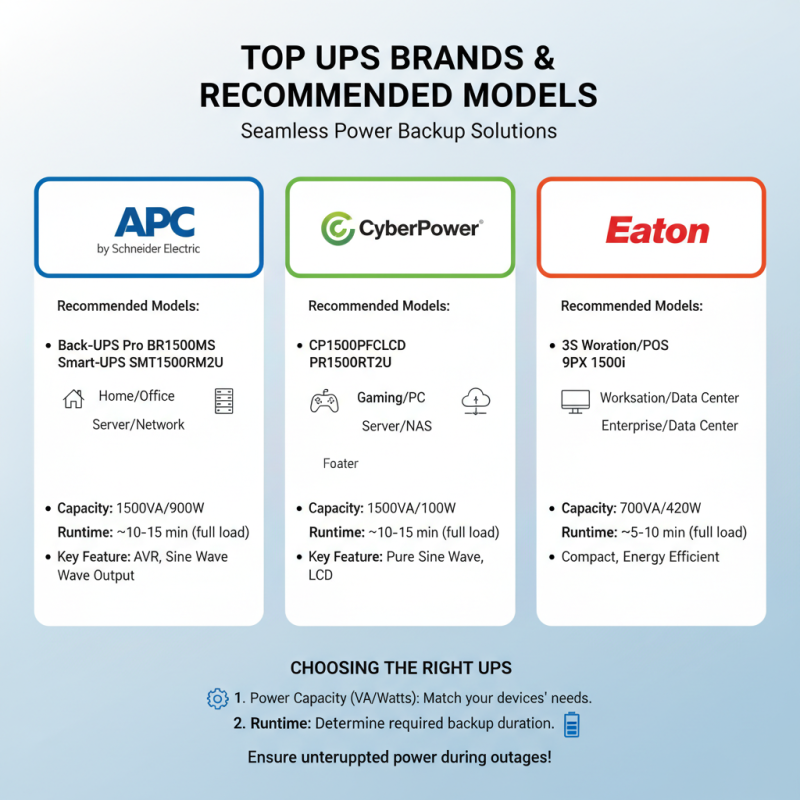
Top UPS Brands and Their Recommended Models
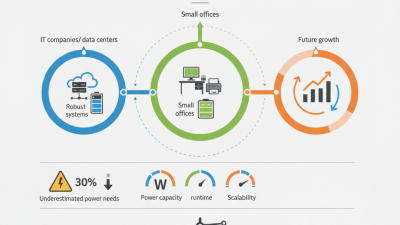
When it comes to reliable power backup solutions, selecting the right Uninterruptible Power Supply (UPS) is crucial. Many users face challenges in maintaining seamless power during outages. Different brands offer various models suited for different needs. Choosing the right one often depends on specific requirements like power capacity and runtime.
Some respected UPS brands provide models that cater to both home and office environments. For instance, basic models can support essential electronics, ensuring they remain operational. More advanced options feature capabilities for longer runtimes, protecting critical systems like servers. Users should assess their power needs carefully. Overestimating requirements can lead to wasted money; underestimating can result in system failures during critical times.
Additionally, not all features are user-friendly. Some models come with complex setups that can confuse consumers. Reliability is paramount, yet many find that struggling with installations diminishes the effectiveness of these devices. Feedback from users can be mixed, highlighting the importance of researching before committing. It's important to weigh the pros and cons of different options to find a trustworthy solution.
Maintenance Tips for Ensuring UPS Reliability
Maintaining your uninterruptible power supply (UPS) is crucial. Regular checks can prevent unexpected failures. Start by inspecting the battery regularly. Look for signs of corrosion or leakage. These can indicate battery age or malfunction.
Another important tip is to keep the UPS in a cool, dry place. Excess heat can reduce the lifespan of your UPS. Make sure air vents are unobstructed. This helps to maintain optimal functioning. Dust buildup can also hinder performance, so consider cleaning the unit periodically.
Documenting maintenance activities can be helpful. Write down the dates of battery replacements or inspections. This log can guide future actions and decisions. It's always better to reflect on previous issues rather than face sudden downtime. Keeping track of performance trends can alert you to potential problems early.
Best UPS Systems for Reliable Power Backup Solutions
| UPS Model |
Power Capacity (VA) |
Runtime (Minutes) |
Features |
Price Range ($) |
| Model A |
1000 VA |
30 |
LCD Display, AVR |
150 - 200 |
| Model B |
1500 VA |
45 |
USB Connectivity, Smart Outlet |
200 - 250 |
| Model C |
2000 VA |
60 |
Network Management, LCD Status |
300 - 350 |
| Model D |
3000 VA |
90 |
Extended Runtime, Hot-Swap Batteries |
450 - 500 |
Maintenance Tips for Ensuring UPS Reliability
- Perform regular battery tests to check for efficiency.
- Ensure proper ventilation around the UPS unit to prevent overheating.
- Keep firmware updated to ensure optimum performance.
- Schedule regular maintenance check-ups with a professional.
- Replace batteries as recommended by the manufacturer.
Benefits of Using a UPS for Power Backup Solutions
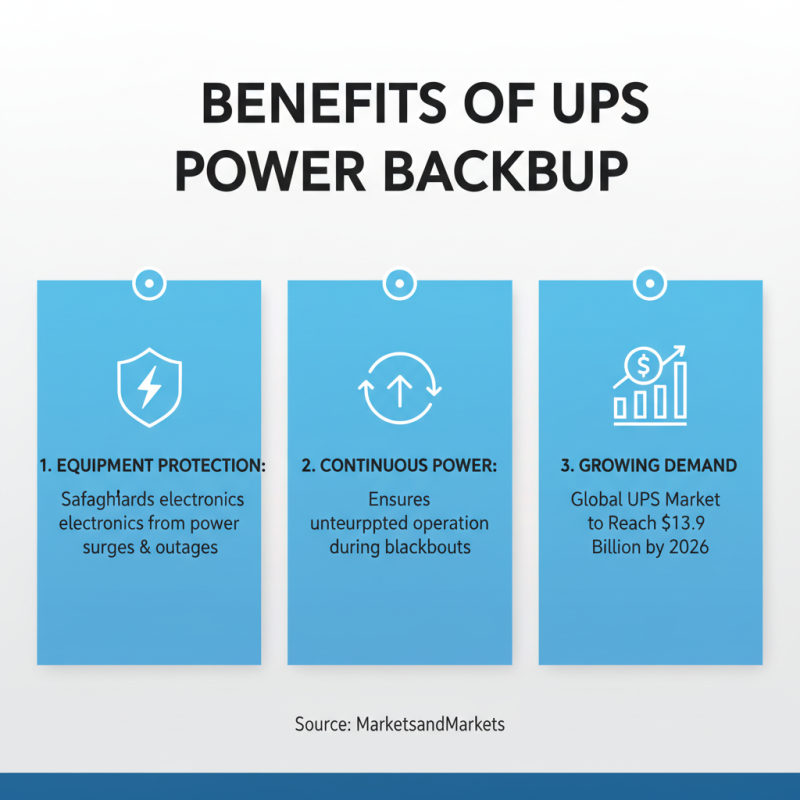
Uninterruptible Power Supply (UPS) systems play a crucial role in ensuring continuous power availability. They protect sensitive electronic equipment from power fluctuations and outages. According to a report by MarketsandMarkets, the global UPS market is expected to reach $13.9 billion by 2026, reflecting the growing demand for reliable power solutions.
Using a UPS offers several advantages, particularly in critical environments. It provides instant power backup during outages, averting data loss and system failures. Surveys indicate that businesses lose approximately $700 billion annually due to downtime. A UPS mitigates such risks, enhancing productivity and system resilience. Moreover, a UPS can regulate voltage, safeguarding hardware from surges. This proactive approach can extend the lifespan of equipment, proving cost-effective in the long run.
However, choosing the right UPS is not without complexities. Users must assess their power needs accurately. Underestimating capacity can lead to system overload during an outage. Regular maintenance is vital, yet often overlooked. Many organizations neglect UPS health checks, risking unexpected failures. Balancing immediate needs with long-term reliability requires thoughtful consideration and strategic planning.