
China has become a significant sourcing base for professional wire processing equipment, including the Digital Crimper. Global buyers often compare manufacturers by product accuracy, production experience, and after-sales reliability. A dependable supplier should provide clear specifications, stable crimping pressure, repeatable results, and practical support for installation and maintenance.
This guide examines China’s top Digital Crimper manufacturers through a buyer-focused lens. It considers factory capabilities, quality control procedures, engineering experience, customization options, and export performance. Details matter. A well-built machine should deliver consistent terminals across repeated cycles, display readable settings, and protect operators with sensible safety features. Buyers should also review sample testing, inspection records, warranty terms, spare-part availability, and response times. Certifications can support confidence, but they should match the destination market and the actual machine model.
Not every supplier will fit every application. Some manufacturers excel at standard equipment, while others handle custom dies, automated feeding, or integrated production lines. This distinction is easy to miss. Factory photographs are not enough. Direct communication, technical drawings, video demonstrations, and pre-shipment inspections reveal more. Even experienced buyers may overlook software usability or voltage compatibility. That deserves a second look. By comparing evidence instead of relying on promotional claims, international purchasers can identify capable partners and reduce avoidable sourcing risks. The goal is not simply to find a low price. It is to select a reliable Digital Crimper manufacturer that can support safe, efficient, and consistent production over time.
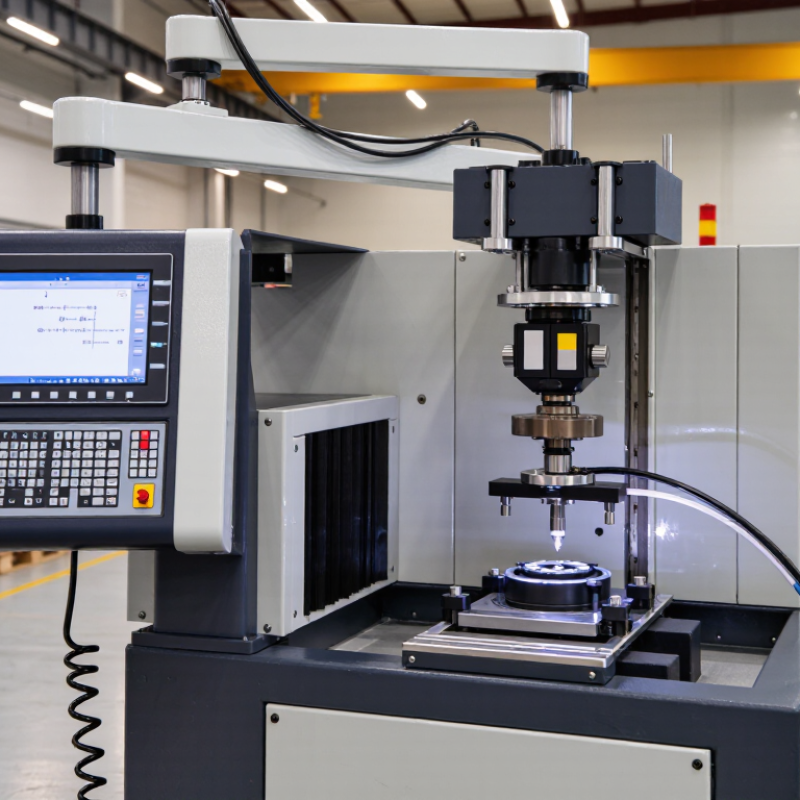
A digital crimper is an electrically powered tool that joins a wire terminal to a conductor. Unlike a manual crimper, it uses a motor, pressure sensor, and digital control panel. The operator selects a suitable die size and enters the required crimping setting. The machine then applies measured force around the terminal.
The process is precise but not automatic magic. A stripped wire is placed inside the terminal, while the terminal rests between matched dies. When the cycle starts, the dies close evenly and compress the metal around the conductor. A sensor checks force or position during compression. If the reading falls outside the preset range, the system can stop the cycle or display a warning. This helps reduce loose connections and uneven crimps.
Small details matter. Wire length, terminal material, die wear, and insulation thickness can change the result. Experienced operators inspect sample crimps with a pull test and cross-section check. The screen may show perfect data, yet the physical connection still deserves attention. That is an easy point to miss.
For global buyers comparing digital crimper manufacturers, ask about calibration records, replacement dies, cycle testing, and operator training. Request test samples using your actual terminals and cables. A reliable supplier should explain force accuracy, maintenance intervals, safety controls, and quality inspection methods clearly. Some specifications look impressive on paper. Real production evidence matters more.
For global buyers, a high-quality digital crimper must deliver measurable results, not attractive displays. The tool should show crimping force, cycle count, battery status, and error codes clearly. A screen can still lie. Buyers should request calibration records and sample test reports before ordering. IEC 60352-2 provides useful guidance for crimped electrical connections, especially regarding mechanical strength and electrical performance.
Measurement repeatability matters on a busy production line. A 2024 IMARC Group report valued the global hand tools market at over USD 23 billion, reflecting strong demand for reliable professional equipment. However, market growth does not guarantee precision. The crimper should record force curves, detect incomplete cycles, and prevent release after a failed operation. Data export through USB or wireless connection improves traceability during inspections. Some suppliers overstate accuracy without explaining test conditions. That deserves scrutiny.
Practical design also defines quality. Look for hardened dies, quick die replacement, balanced handles, and low-vibration operation. A clear display should remain readable under workshop lighting and with protective gloves.
Battery capacity must support a full shift, while charging should not overheat the housing. The 2023 Global Market Insights report projected continued expansion in industrial automation, increasing pressure for connected tools and process records. Even so, connectivity is not everything. A rugged enclosure, stable software, and accessible service support may matter more than advanced menus.
China’s leading digital crimper manufacturers serve wiring, automotive, appliance, and industrial assembly markets. Their strongest advantage is process depth. Many factories combine CNC machining, electronic testing, die production, and export inspection under one roof. Grand View Research valued the global hand tools market at approximately USD 23 billion in 2023. Its forecast indicates steady growth through 2030, supported by industrial maintenance and manufacturing demand. Digital crimpers benefit from this shift toward measurable assembly quality.
A capable manufacturer should provide crimp-force data, calibration records, material certificates, and repeatability results. Ask for samples using your actual wire sizes. A clean display is helpful, but stable compression matters more. IEC 60352-2 provides useful guidance for solderless crimped connections, while ISO 9001 supports controlled production systems. The International Federation of Robotics reported 541,302 industrial robots installed globally in 2023. More automated factories need tools that communicate clearly with inspection routines.
Global buyers should also examine battery life, die replacement, operator training, packaging, and spare-part response. Export experience reduces avoidable delays, yet it does not guarantee perfect communication. I have seen specifications fail because “cycle” and “stroke” were interpreted differently. That detail deserves written confirmation. A supplier’s factory audit, video inspection, and pilot order can reveal more than a polished catalogue. The best choice is not always the cheapest quotation. Sometimes, a modestly priced tool creates expensive rework.
Comparing digital crimper suppliers requires more than checking price and advertised force. Ask for test reports, calibration records, material specifications, and clear model numbers. A reliable supplier should explain how force is measured and how often the display requires calibration. Vague answers create expensive uncertainty.
Compare each model by crimping range, jaw compatibility, cycle time, battery capacity, and total weight. A compact tool may suit field technicians, while a heavier model can perform better on repeated industrial work. Check whether the dies are replaceable and whether spare parts remain available for several years. Small details matter.
Request a sample before placing a large order. Test several terminal sizes and inspect the crimp profile under consistent pressure. Record cycle results, battery changes, temperature, and operator feedback. The display may look precise, but the actual crimp can still vary. That is worth questioning.
Supplier evaluation should also include factory experience, quality-control procedures, export documentation, warranty terms, and technical response time. Ask for a video of production and final inspection, but do not treat video evidence as complete proof. An independent inspection may cost more, yet it can reveal loose dies, uneven finishing, or unstable software. Some buyers focus too heavily on maximum force. In practice, repeatability and service support often decide the real value.
Global buyers should assess digital crimper suppliers beyond price and product photos. Practical sourcing experience shows that stable output matters more than a low initial quotation. Ask for production records, material specifications, calibration procedures, and sample test results. A useful supplier can explain crimping force, battery performance, display accuracy, and expected service life in clear language.
Compliance documents must match the destination market. Request electrical safety reports, battery transport documents, user manuals, and traceable serial numbers. Check whether test reports describe the exact model, not a similar product. This detail is often missed. Importers should also confirm packaging labels, plug types, recycling marks, and restricted-substance requirements with local professionals. Requirements can change.
Warranty terms need practical detail. Confirm coverage length, excluded damage, response times, and responsibility for shipping defective units. A two-year promise means little without replacement parts. Ask about spare batteries, jaws, chargers, seals, and display modules. After-sales support should include video diagnostics, repair instructions, and trained technical contacts. Language delays can stop a production line. One honest weakness deserves attention: some suppliers respond quickly before the order, then slowly afterward. Test support before signing, using a technical question and a sample fault report. Keep every commitment in the purchase contract.
