
Call Us For Your Battery Needs
800-400-4858
Why Choose a Battery Store for Global Sourcing?
Global battery demand is changing quickly. The International Energy Agency reported that electric vehicle battery demand reached approximately 750 GWh in 2023, rising by about 40% in one year. This growth affects more than vehicle manufacturers. It also reshapes sourcing decisions for distributors, equipment makers, and energy-storage developers.
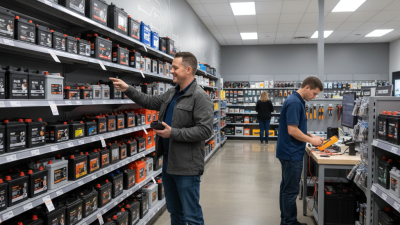
A specialized battery store can offer a practical sourcing bridge. Buyers may compare lithium-ion, LiFePO4, lead-acid, and other technologies in one place. They can inspect terminal designs, enclosure quality, labels, and protection features before placing larger orders. That physical experience matters. A datasheet cannot reveal every loose connector or poorly sealed case.
Price is only one factor. BloombergNEF’s 2024 Battery Price Survey placed the average lithium-ion pack price at $115 per kWh, a 20% decline from the previous year. However, lower prices do not automatically mean lower risk. Cell traceability, test documentation, warranty terms, transport conditions, and after-sales support still influence the final cost.
A capable battery store may also consolidate suppliers and recommend compatible accessories, such as chargers, cables, fuses, and battery-management systems. This can reduce communication gaps across time zones. It may simplify sampling before global purchasing. Yet, not every store provides equal technical depth. That is the uncomfortable part.
Buyers should verify certifications, test reports, production dates, and shipping capabilities independently. The IEA’s Global Critical Minerals Outlook 2024 also warns that battery supply chains remain geographically concentrated. Therefore, a reliable battery store should support informed diversification, not promise effortless sourcing. Good sourcing is measurable, documented, and occasionally cautious.
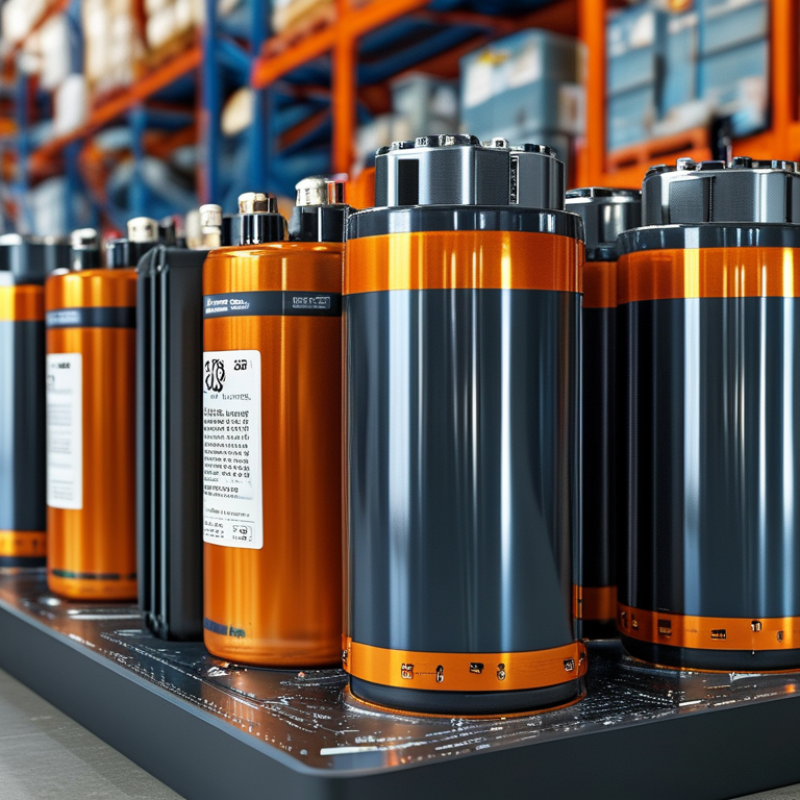
What a Battery Store Offers Global Buyers
A battery store can give global buyers more than a product list. It can provide practical sourcing guidance based on battery type, voltage, capacity, and operating conditions. A buyer may need compact cells for sensors or durable packs for industrial equipment. The right store helps match these requirements with suitable specifications. That conversation reduces costly trial and error. It also creates a clearer purchasing record.
Experienced battery sellers can support sample orders, technical datasheets, and batch-level quality checks. Buyers should ask about capacity testing, cycle-life results, safety features, and packaging standards. Reliable stores explain what their documents prove, and what they do not prove. They can also clarify shipping conditions, storage temperatures, and expected lead times. Global orders require careful attention to import rules and transport requirements. These details can change by destination. No supplier gets every detail right every time, so transparent communication still matters.
Tips: Request samples before placing a large order. Compare measured capacity with the specification sheet. Confirm connector types and dimensions with a physical drawing. Keep written records of approvals and changes. Ask how rejected units are handled. A small mistake here can delay an entire shipment. Overlooking storage conditions is another common error. Buyers should review the final quotation twice, especially when currencies or minimum order quantities differ.
Why Choose a Battery Store for Global Sourcing? - What a Battery Store Offers Global Buyers
| Sourcing Dimension | What a Battery Store Offers | Typical Data or Range | Value for Global Buyers |
|---|---|---|---|
| Battery Chemistry Selection | Access to common rechargeable and primary battery technologies | Lithium-ion, lithium iron phosphate, nickel-metal hydride, lead-acid, alkaline, and lithium primary cells | Makes it easier to match energy density, safety, cycle life, operating temperature, and cost requirements |
| Cell Formats | Multiple form factors for product integration | Cylindrical, prismatic, pouch, coin, button, and custom battery packs | Supports compact electronics, industrial equipment, mobility products, backup systems, and medical devices |
| Capacity and Voltage Options | Products grouped by electrical specifications | Single-cell nominal voltage commonly ranges from approximately 1.2 V to 3.7 V; packs can be configured for higher voltage and capacity | Reduces design time when buyers need a close electrical match for an existing product |
| Technical Documentation | Specification sheets and shipment-related battery information | Capacity, nominal voltage, charge limits, discharge limits, dimensions, weight, safety instructions, and test documentation | Helps engineering, purchasing, customs, and compliance teams evaluate products consistently |
| Transport Compliance | Support for lithium battery shipping requirements | UN 38.3 testing is commonly required for lithium cells and batteries transported by air, sea, road, or rail | Lowers the risk of shipment delays, rejected cargo, and incomplete customs files |
| Product Safety Standards | Guidance on applicable battery and product safety requirements | Common references include IEC 62133-2 for portable rechargeable lithium systems and IEC 60086 for primary batteries | Improves product evaluation before import, assembly, or market launch |
| Quality Inspection | Pre-shipment checks and specification verification | Typical checks include appearance, dimensions, voltage, capacity sampling, internal resistance, labeling, and packaging condition | Helps identify specification deviations before goods leave the supply chain |
| Customization Capability | Battery pack configuration and accessory options | Possible options include connectors, wiring, protective casing, mounting features, labels, battery management systems, and pack dimensions | Allows buyers to source batteries that fit product geometry and operating conditions |
| Minimum Order Planning | Product selection for samples, pilot orders, and regular purchasing | Sample quantities may begin at a few units; production minimum order quantities vary by chemistry, pack design, customization, and production schedule | Enables staged purchasing and reduces the risk of committing to large volumes before validation |
| International Packaging | Packaging designed to protect cells and battery packs during transit | Insulation against short circuits, protective inner packaging, suitable outer cartons, labels, and handling marks where required | Supports safer handling and more reliable delivery across international routes |
| Shelf-Life and Storage | Storage guidance based on battery chemistry | Recommended conditions commonly include a cool, dry environment, protection from direct sunlight, and avoidance of extreme temperatures; exact limits vary by product | Helps preserve battery performance while products are held in inventory or in transit |
| Consolidated Procurement | One sourcing channel for different battery types and pack specifications | Can combine standard cells, rechargeable packs, accessories, and replacement batteries according to order terms | Simplifies communication, purchasing administration, and shipment coordination |
| Lifecycle and Replacement Planning | Support for repeat orders and compatible replacement sourcing | Replacement planning can consider dimensions, connector type, voltage, capacity, discharge rate, and mechanical fit | Improves continuity of supply and reduces the risk of incompatible replacement batteries |
Note: Specifications, certifications, minimum order quantities, lead times, and shipping conditions vary by battery chemistry, product design, destination market, and applicable regulations.
Related Posts
-
10 Best Tips for Finding the Perfect Batteries at The Battery Store
-
How to Choose the Right Battery Store for Your Needs?
-

Top Battery Store in China for Global Buyers Seeking Quality?
-
10 Best Car Battery Stores for Reliable Power Solutions?
-
Top 10 Reasons to Visit a Battery Store for Your Power Needs?
-

2026 Top Car Battery Store Tips for Global Buyers?