How to Choose the Right Battery Connector for Your Needs?
Choosing the right Battery Connector is crucial for performance and safety. Expert John Doe, a veteran in the battery manufacturing industry, emphasizes, "The right connector can make or break your entire system." With various types of battery connectors available, selecting the right one involves understanding specific needs.
Battery connectors serve as the lifeline between power sources and devices. They must ensure reliable connectivity, preventing common issues like overheating or short circuits. Each application demands its unique specifications. For instance, high-drain electronics need connectors that can handle significant current loads. Too often, individuals overlook these details, leading to safety concerns or system failures.
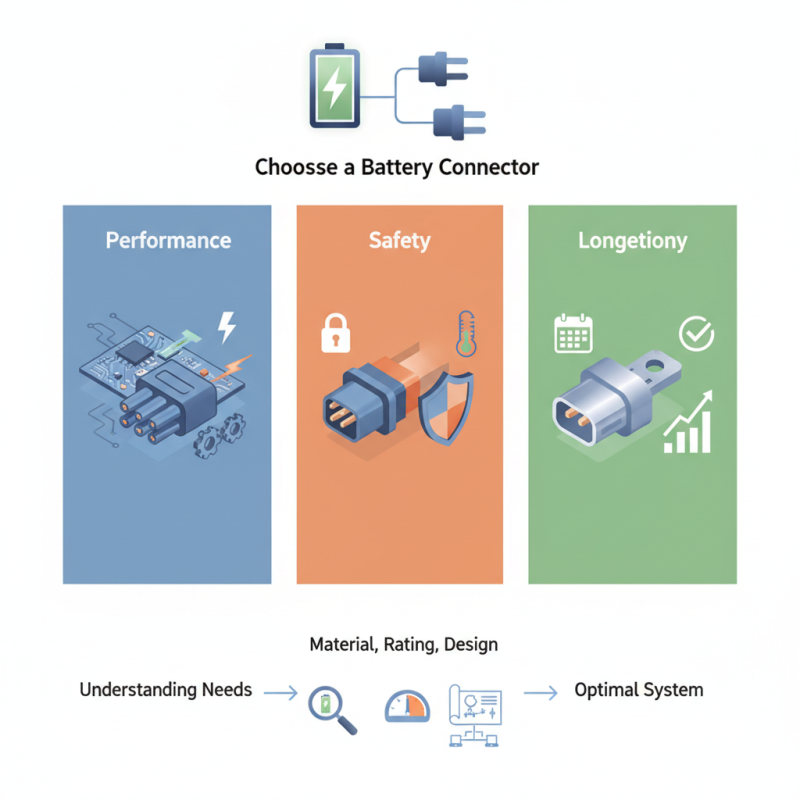
Many users settle for generic options, ignoring varying quality levels. This can impact efficiency and longevity. Reflecting on this, it’s essential to consider materials, ratings, and design when selecting a connector. The right battery connector enables optimal performance and longevity in any electronic setup.
Understanding Different Types of Battery Connectors Available
When selecting a battery connector, understanding the types available is crucial. There are various connectors, each designed for specific uses. Common options include JST, Anderson, and Molex connectors. Each type has its unique advantages and disadvantages. For instance, JST connectors are compact and easy to use, making them popular in hobbyist projects. However, they may not handle high currents well.
Anderson connectors are favored for high-power applications due to their robust design. Yet, they can be bulkier than other types. Molex connectors provide versatility across different industries. They work well for both low and high-power setups. However, users often report difficulty in connecting them correctly. Understanding these nuances is essential when making a choice.
Consider the specific needs of your project. The connector must match the voltage and current requirements. It should also fit well with your battery's terminals. If you notice some connectors seem too flimsy, it's worth reconsidering your options. Take time to evaluate the reliability of each type. A poor choice can lead to malfunction or safety hazards. Be aware of the limitations of each connector to ensure optimal performance.
Identifying Your Power Requirements and Application Needs
When selecting a battery connector, understanding your power requirements and application needs is crucial. For instance, low-current applications might require simple connectors, while high-current systems necessitate robust options. Research shows that connectors rated for 10A may work well for portable devices. However, heavier machinery may demand connectors exceeding 100A. Selecting the right connector directly impacts performance and reliability.
Another vital factor is environmental conditions. Connectors must endure various temperatures, humidity levels, and even exposure to corrosive elements. A study by the Connector Industry Association indicates that around 30% of connector failures arise from improper environmental ratings. It's essential to consider these ratings when making a choice.
Reflection on your specific use case can provide further clarity. It’s important to assess both short-term and long-term needs. While a cheaper option may suffice initially, it could lead to failures down the line. The decision process should incorporate anticipated future applications as well. Balancing immediate requirements with potential growth will guide you in choosing the most suitable battery connector.
Evaluating Connector Materials and Durability Factors
Selecting the right battery connector involves understanding various connector materials and their durability. Metal components play a crucial role. Copper connectors are common, offering excellent conductivity. However, they can corrode over time. On the other hand, aluminum connectors are lighter but may not provide the same conductivity. Assessing the environmental conditions is key.
Consider the usage environment when evaluating durability. Connectors used outdoors require better resistance to moisture and UV exposure. Plastic housings are often employed for this purpose, but they can become brittle in extreme temperatures. Rubber seals can enhance protection, yet they may wear down with time. Choosing the right connector means balancing performance and longevity.
Finally, think about the potential for mechanical stress. Connectors that are frequently connected and disconnected must withstand wear and tear. Some designs offer locking mechanisms, which can enhance stability. Durability is a multifaceted issue. It is vital to reflect on trade-offs in materials and designs during selection. Each option presents benefits and drawbacks. Making an informed choice requires careful consideration of all factors involved.
Assessing Size, Weight, and Space Considerations for Connectors
When selecting a battery connector, size and weight matter significantly. If you're working on compact devices, a smaller connector can save precious space. Bulky connectors can make designs bulky and unwieldy. Look for lightweight materials that can handle the demands of your application without adding unnecessary weight.
Space considerations involve not just the connector’s physical dimensions, but also its mounting needs. Some connectors require additional support or housing, impacting the overall layout. Assess the installation area carefully. Is there room for maintenance? Will vibrations affect performance? These questions guide the right choice for any project.
Evaluating your needs also requires understanding how often the connector will be connected and disconnected. Frequent insertions necessitate robust designs. Fragile connectors can lead to wear and tear. Reflecting on past experiences can provide valuable insights. Emphasizing a balance between functionality and design can lead to more efficient outcomes.
Ensuring Compatibility with Existing Equipment and Standards
Choosing the right battery connector involves understanding compatibility with your current equipment and industry standards. Not all connectors are created equal. Each type has its specifications and applications. It’s essential to consider the technical requirements of your devices. Measure voltage, amperage, and environmental conditions. This ensures optimal performance and safety.
Many users overlook the importance of matching connectors to specific standards. Using an incompatible connector can lead to poor performance or damage. Research the connector types used in your existing systems. Look for variations in size and material. A visually similar connector might not work due to subtle differences. That's where compatibility checks become crucial.
If your equipment is outdated, finding compatible connectors can be challenging. Inventory may be limited for older models. You may need to adapt your design or consider custom connectors. This process can be time-consuming and costly. Sometimes, it’s worth reflecting on whether your equipment needs upgrading. Evaluate the benefits and potential issues. This could lead you toward making a more informed choice about connector types that truly meet your needs.
Battery Connector Types and Their Compatibility
This chart illustrates the compatibility ratings of different battery connector types based on compatibility with existing equipment and standards. The ratings indicate how well each connector type works with various systems.