
Choosing a CNC machining company is not just a matter of comparing hourly rates. It means trusting a supplier to turn a drawing into repeatable, verifiable parts. That distinction matters. Grand View Research valued the global CNC machine market at $101.22 billion in 2023 and projected 6.3% annual growth from 2024 to 2030. This estimate describes the equipment market, not the quality of individual machine shops. Still, it points to a competitive field where capability claims deserve careful checking.
Manufacturing quality expert W. Edwards Deming wrote, “Quality comes not from inspection, but from improvement of the production process.” His principle applies to supplier selection: ask how a shop controls the process, not only how it inspects finished parts. Request details about material traceability, measurement equipment, tolerance control, and first-article inspection. Ask how the team responds to tool wear or a late drawing revision. A polished website proves little. A clear inspection report can reveal much more.
Price matters. So does communication. A low quote may exclude finishing, inspection, or packaging, so compare the full scope. Look for relevant experience with your material, part geometry, and production volume. Then speak with the people who will handle the work. One limitation remains: no certificate or sample part can guarantee future consistency. This checklist is imperfect, too; real projects often expose requirements that drawings leave unclear. That is why a useful introduction should lead to specific questions, not a rushed decision.
Start with the part’s job, not a preferred machine. Note what it connects to, what loads it carries, and whether it faces heat, moisture, or repeated movement. These details can affect material and process choices. An aluminum bracket beside a warm motor may need different checks than a decorative cover. Small distinctions matter.
Share a clear drawing or CAD file, and identify the dimensions that affect fit or function. Specify tolerances only where they are genuinely needed. Applying a very tight tolerance to every dimension can increase machining time and inspection effort without improving the part. Include material grade, surface finish, order quantity, and any required post-processing, such as deburring or anodizing. A ten-piece prototype run may call for different planning than a recurring production order.
Describe how the part will be inspected and used. If a shaft must slide into a bore, state the fit requirement; if a face mates with a seal, call out its finish. Photos of the assembly can clarify details that drawings miss. Your initial specifications may still leave questions, and that is normal. Review assumptions with the machining team before approving production, especially when dimensions or materials are uncertain.
When finding CNC machining companies, build a shortlist around your part’s actual requirements. Send the same drawing, material grade, tolerance callouts, finish, and annual volume to each candidate. Then compare how clearly they explain their process—not just the quoted price. Ask for examples of similar parts, inspection methods, and how they control revisions. A polished quote can still hide a weak process; that is easy to overlook.
Deloitte’s 2024 Smart Manufacturing Survey found that 86% of surveyed manufacturing executives expect smart manufacturing solutions to drive competitiveness within five years. This is not a CNC supplier ranking, but it underscores why production data matters. Ask whether a company can provide inspection records, material traceability, and clear updates when a job changes. For a tight-tolerance component, request a sample inspection report and confirm which features are measured. Check machine capacity and lead times against your part’s size, material, and batch quantity. Be wary of confident promises without evidence.
Tips: Share a representative drawing under an appropriate confidentiality arrangement. Ask each candidate the same questions, then verify references and sample documentation. A small paid trial can reveal communication gaps before a larger order. Don’t assume the lowest quote is the best value.
| How to Choose a CNC Machining Company? - Find and Screen Potential CNC Machining Companies | ||||
|---|---|---|---|---|
| Screening Dimension | Questions to Ask | Evidence to Request | Practical Evaluation Guide | Notes |
| Process capability | Which processes can you perform in-house, such as CNC milling, turning, drilling, or 5-axis machining? | Process list, machine capability overview, and examples of comparable parts. | Confirm that the required operations, part envelope, and production volume fit the available equipment. | Ask which operations, if any, are subcontracted. |
| Material experience | Have you machined this material and its specified condition before? | Material certificates for sample or production parts, plus relevant machining references. | Verify the exact alloy or grade, temper or condition, and any required traceability. | A similar material is not always an equivalent substitute. |
| Dimensional capability | Can you hold the tolerances and geometric requirements shown on the drawing? | Inspection report or sample measurement results for comparable features. | Review critical dimensions individually; do not rely only on a general statement of achievable tolerance. | Tolerance capability depends on the feature, material, part size, and process. |
| Quality system | How are nonconforming parts, corrective actions, and document revisions controlled? | Quality-system certificate, inspection procedure, and a redacted example of a corrective-action record. | Check that the system is appropriate to the product and that certificates are current and verifiable. | Certification does not replace review of actual inspection practices. |
| Inspection equipment | How will critical dimensions and surface requirements be measured? | Equipment list, calibration records, and a sample dimensional inspection report. | Confirm that measurement methods suit the required features and that measuring equipment is calibrated. | Some complex geometry may require a coordinate measuring machine or a dedicated fixture. |
| Finishing and secondary operations | Can you manage specified finishing, heat treatment, deburring, or assembly? | Process details, finish specifications, and records identifying any approved subcontractors. | Confirm finish type, masking requirements, dimensional effects, and responsibility for final inspection. | Finishing processes can affect dimensions, appearance, and material properties. |
| Lead time and capacity | What are the quoted lead time, available capacity, and assumptions behind the schedule? | Written quotation with milestones, quantity assumptions, and stated production constraints. | Compare like-for-like quantities and delivery terms; ask how schedule changes are communicated. | Lead times vary with material availability, complexity, workload, and finishing. |
| Quotation clarity | Does the quote identify material, quantity, tolerances, finishing, inspection, and delivery terms? | Itemized quotation and a list of assumptions or exclusions. | Resolve unclear specifications and exclusions before placing an order. | A low initial price may omit inspection, tooling, finishing, or shipping costs. |
| Communication and engineering support | Who reviews drawings and raises questions about manufacturability or ambiguous requirements? | Sample technical question log, drawing-review process, and named project contact. | Look for clear, timely questions before production rather than assumptions about critical features. | Agree on the approved drawing revision and change-control process. |
| Packaging and delivery | How will parts be protected, identified, and shipped? | Packaging specification, labeling example, and delivery terms. | Match protection and identification to part fragility, cleanliness, traceability, and destination. | Specify packaging requirements before the order is released. |
| Confidentiality and file handling | How are drawings, CAD files, and other confidential information protected? | Confidentiality agreement, file-access procedure, and retention or deletion policy. | Confirm who can access files and how revisions and obsolete files are controlled. | Share only the information needed for quotation and production. |
| Trial order and supplier review | Can a representative first article or small trial batch be inspected before repeat production? | First-article inspection report, sample parts, and documented approval criteria. | Define acceptance criteria and approval responsibilities before starting the trial. | Use the trial to validate both the part and the supplier's communication and documentation. |
How to Choose a CNC Machining Company?
Evaluate Equipment, Expertise, and Quality Controls
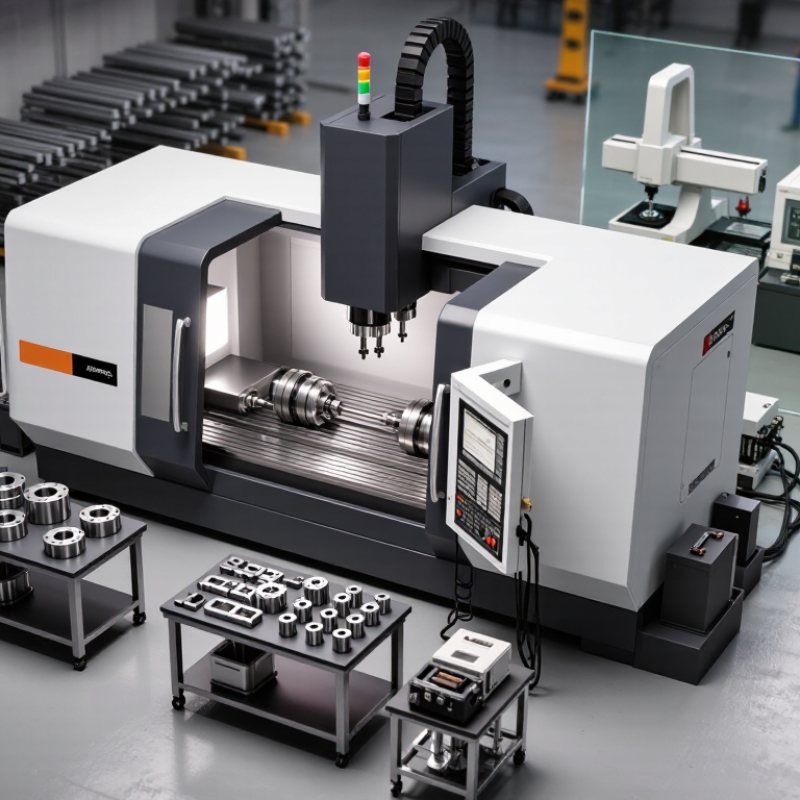
Start with the equipment, but look beyond machine count. Ask whether the shop runs suitable mills or lathes for your part’s size, material, and tolerances. A machine’s advertised capacity means little if its work envelope barely fits your component. Ask to see it. Check for visible maintenance records and organized tooling; neglected fixtures can affect repeatability.
Expertise shows in the questions a team asks before quoting. They should clarify critical dimensions, surface finishes, production quantities, and how parts will be used. For example, a machinist may suggest changing an internal corner radius to match available tooling. That can reduce machining time without changing the part’s function. A practical review of your drawing is valuable, though recommendations still deserve careful review.
Quality controls should be specific and documented. Ask how operators check first articles and monitor dimensions during a run. Look for calibrated measuring tools, such as micrometers and coordinate measuring machines, plus clear inspection records. A tidy report should connect measured results to drawing requirements. Even a capable supplier can miss a detail; its response matters as much as the mistake. Discuss how issues are recorded, investigated, and communicated before production begins.
Evaluate equipment, expertise, and quality controls using a balanced assessment framework.
Suggested evaluation weights—not company performance data. Prioritize equipment capability, machining expertise, and documented quality controls, then adjust the weights to fit your part, material, tolerance, and production needs.
A short quoted lead time can look attractive, but ask what it includes. Does it begin after drawing approval, material arrival, or payment? Those dates can differ by days. For a small aluminum bracket, a supplier may need time for stock, setup, machining, inspection, and shipping. Request a realistic schedule for each stage, plus a clear note about what could cause delays. “Ready to ship” is not the same as “delivered.”
Communication matters when details change. Send a drawing with material, tolerances, finish, and inspection requirements clearly marked. Then notice how the shop handles questions: are they specific, timely, and tied to the drawing? A useful response might flag a deep pocket that needs a longer tool, rather than simply promise the part can be made. Ask how revisions are tracked and who will confirm them. Small gaps can become expensive. I would not judge a supplier by one polished quote alone; follow-up often reveals more.
Compare total costs, not just the per-part price. Include setup, programming, tooling, finishing, inspection, packaging, and freight. A low quote may exclude deburring or a required measurement report. Ask for those items in writing, and check whether the price changes with quantity or material availability. If two quotes differ sharply, ask what assumptions explain the gap. A cheaper option may still fit, but only if its process and delivery match your needs.
A CNC machining company may show polished photos, but a sample reveals how its process performs. Request a part made from your actual material and drawing, not a convenient substitute. Check critical dimensions with suitable measuring tools, and compare the results with your tolerances. Look closely at hole positions, edge finish, threads, and burrs. Small details matter. Ask for the inspection report and confirm which features were measured. A sample can still mislead if it was hand-finished more carefully than normal production, so ask how it was made.
Tips: Mark three to five critical dimensions on your drawing. Ask the supplier to record actual readings, not just “pass.” Check packaging, labeling, and delivery condition too. Keep your own notes; memory gets fuzzy.
If the sample meets requirements, place a small pilot order before committing to larger volumes. Use the same drawing revision, material specification, and finishing instructions planned for production. Inspect several pieces from different positions in the batch, since one perfect part proves little about consistency. If a dimension drifts, discuss the cause and corrective action before ordering again. Be realistic: a pilot order adds time and cost, but skipping it can make a small uncertainty expensive. A clear written acceptance list helps both sides judge the parts fairly.
