Top Power Backup Solutions for Uninterrupted Energy Supply?
In today's fast-paced world, maintaining a reliable power supply is essential. Power outages can disrupt daily life and business operations. Therefore, having a robust power backup solution is crucial. Whether for home or commercial use, effective power backup systems can provide peace of mind during unexpected outages.
Different options are available for power backup, such as generators, battery systems, and UPS devices. Each solution has its unique advantages and limitations. Understanding these differences can help you make an informed decision that meets your specific needs. Power backup not only preserves essential functions but also safeguards valuable equipment and data.
However, selecting the right power backup solution can be challenging. Many consumers face a variety of choices, often lacking clear guidance. It's important to evaluate factors such as capacity, efficiency, and cost. Some may recognize the need but overlook the importance of quality and reliability in their choices. This discussion aims to explore effective power backup solutions that ensure an uninterrupted energy supply, addressing both expert insights and common user concerns.
Understanding the Importance of Power Backup Solutions
Power backup solutions are essential for maintaining continuity in energy supply. According to a study by the International Energy Agency, nearly 80% of businesses reported losing revenue due to power outages. A reliable power backup system can minimize these losses. Uninterrupted power is crucial, not just for businesses but also for homes, ensuring that appliances function and safety is maintained during outages.
Data from the U.S. Department of Energy indicates that power outages cost the U.S. economy about $150 billion annually. This staggering figure highlights the need for effective power backup solutions. Options such as uninterruptible power supply (UPS) systems, generators, and energy storage systems are often considered. Each option presents unique benefits and challenges.
When selecting a power backup solution, one must reflect on specific needs and available resources. Not all systems work for every scenario. For instance, a UPS provides immediate power but offers limited duration. In contrast, generators can sustain power longer but may require regular maintenance. Evaluating the trade-offs can lead to better decisions tailored to specific circumstances.
Top Power Backup Solutions for Uninterrupted Energy Supply
This chart illustrates the capacity of various power backup solutions measured in kilowatts (KW). The data represents the general performance of these solutions in providing uninterrupted energy supply during outages.
Types of Power Backup Systems: An Overview of Options Available
As power outages become more frequent, the need for effective backup solutions grows. Various options are available to ensure uninterrupted energy supply. Key systems include uninterruptible power supplies (UPS), generators, and battery storage systems. Each type has its advantages and limitations.
UPS systems are ideal for providing instant power during a blackout. They can sustain critical equipment for a short duration, usually up to a few hours. However, their reliance on battery capacity limits their effectiveness for prolonged outages. On the other hand, generators can provide power for an extended period, but they require fuel and proper maintenance. Industry reports show that 40% of businesses experience data loss during outages, highlighting the importance of a reliable UPS system for data integrity.
Battery storage is gaining traction as renewable energy sources grow. These systems can store excess energy, which can be crucial during peak demand. Recent studies indicate that the global battery storage market is expected to reach $300 billion by 2026. However, the upfront investment can be significant, and maintenance costs often vary widely. Finding the right balance between cost, capacity, and reliability is essential for successful implementation.
Evaluating the Efficiency of Generators and Battery Backup Systems
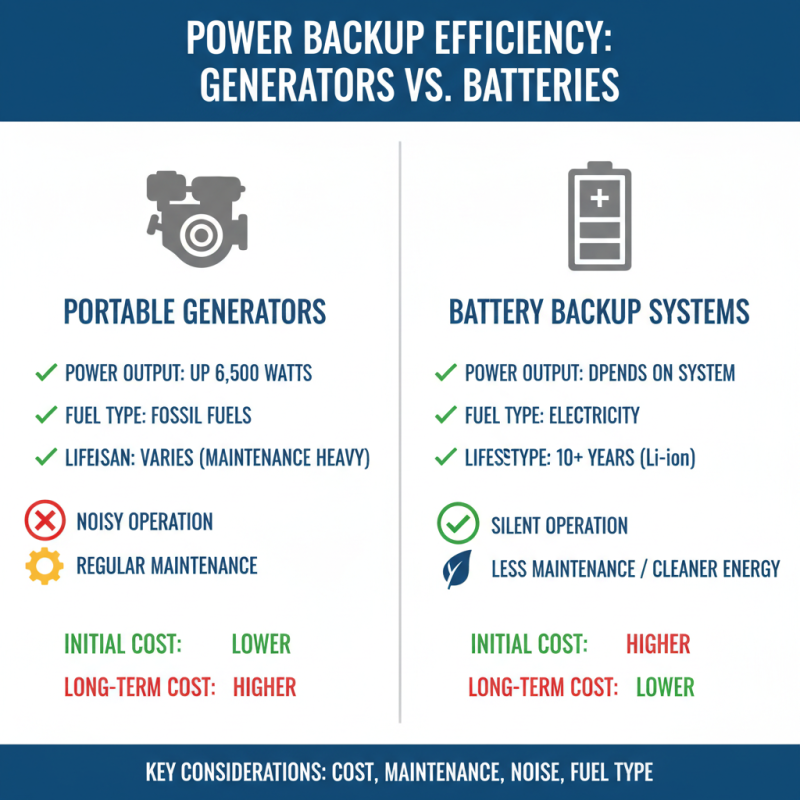
When considering power backup solutions, the efficiency of generators versus battery systems is crucial. Recent reports indicate that portable generators can deliver up to 6,500 watts, providing significant power during outages. However, these devices often run on fossil fuels and require regular maintenance. In contrast, battery backup systems, such as lithium-ion solutions, can offer silent operation and have a lifespan of over 10 years. Battery systems, while initially more expensive, show lower long-term costs due to fewer moving parts and no fuel requirements.
Efficiency matters. Generators consume fuel and produce emissions, raising environmental concerns. A report by the U.S. Energy Information Administration highlights that battery systems release zero emissions during use. This factor is becoming increasingly important amid global efforts to reduce carbon footprints. Still, users should consider the energy storage capacity of batteries carefully. A fully charged battery might only last a few hours depending on usage.
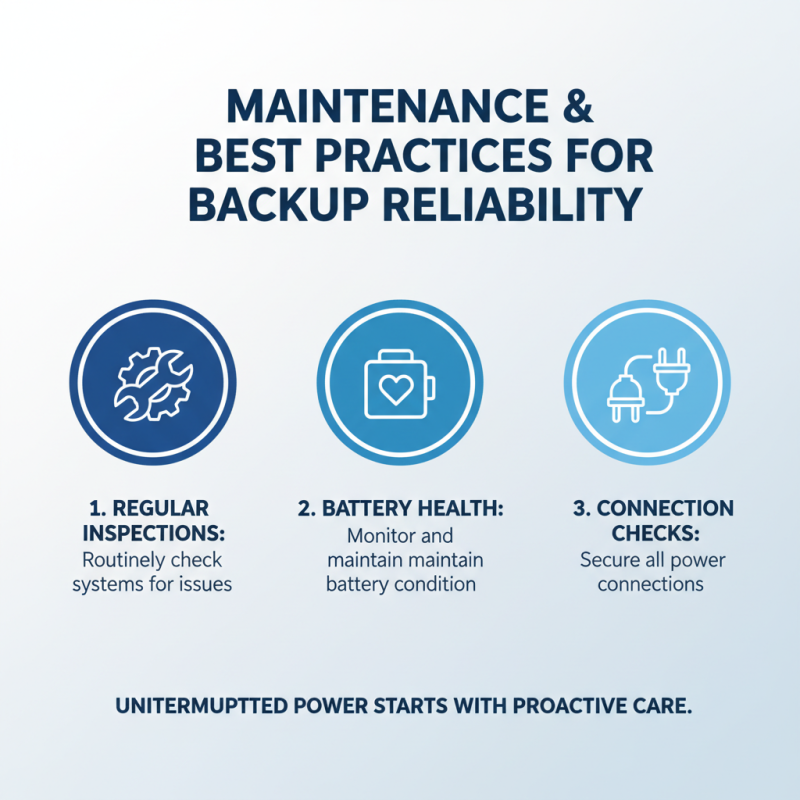
**Tip:** Assess your power needs based on usage duration and wattage to avoid surprises.
Consider the trade-offs between upfront costs and long-term savings. Regularly evaluate your energy consumption. A well-planned approach can yield substantial benefits, whether you choose generators or battery backup systems.
**Tip:** Monitor energy use to optimize backup efficiency.
Factors to Consider When Choosing a Power Backup Solution
When selecting a power backup solution, several critical factors come into play. The capacity of the unit is key. It should meet or exceed the energy requirements of your home or business. According to the Energy Information Administration, the average American household uses about 900 kWh per month. This data highlights the importance of choosing a backup system that can deliver sufficient energy during outages.
Another important consideration is the type of fuel used. Diesel generators, for example, are reliable but can be costly to operate and maintain. A report from the International Energy Agency suggests that natural gas options offer a cleaner alternative with lower operational costs. However, they may require a connection to a gas line. Depending on your location, reliability can vary significantly, creating a need for a tailored solution that fits your unique circumstances.
The runtime of a backup system is equally important. Many systems provide only a few hours of runtime before needing refueling or recharging. This aspect is often overlooked but can impact critical operations. A study from the National Renewable Energy Laboratory indicates that longer runtimes tend to correlate with higher investment costs. Balancing these factors demands careful consideration and planning.
Top Power Backup Solutions for Uninterrupted Energy Supply
| Solution Type |
Capacity (kVA) |
Runtime (Hours) |
Fuel Type |
Noise Level (dB) |
Typical Use Cases |
| Uninterruptible Power Supply (UPS) |
1-20 |
0.5-6 |
Electric |
< 60 |
Computers, Servers |
| Portable Generator |
2-15 |
2-12 |
Gasoline or Diesel |
70-90 |
Construction, Camping |
| Standby Generator |
7.5-50 |
8-48 |
Natural Gas or Propane |
60-70 |
Homes, Businesses |
| Solar Power System |
Varies |
Depends on Battery |
Solar Energy |
Silent |
Sustainable Energy |