
Call Us For Your Battery Needs
800-400-4858
China Top 10 Electric Utility Vehicle Suppliers to Buy From?
The Electric Utility Vehicle market is moving from niche adoption toward practical fleet deployment. IEA’s Global EV Outlook 2024 reported more than 14 million electric car sales worldwide in 2023. China, Europe, and the United States represented over 95% of those sales. The figure covers passenger cars, not work vehicles. Still, it signals stronger battery supply, charging investment, and manufacturing capability.
Fatih Birol, Executive Director of the International Energy Agency, stated, “The electric car market is experiencing exponential growth, as sales are expected to reach 17 million in 2024.” His observation matters for utility vehicle buyers. Electric vans, carts, pickups, and compact service trucks need more than attractive specifications. They require dependable range, useful payload, short charging downtime, and local technical support.
This guide examines 10 leading Electric Utility Vehicle suppliers to buy from. The selection considers product maturity, fleet experience, battery performance, safety features, warranty coverage, and after-sales service. BloombergNEF’s Electric Vehicle Outlook 2024 also highlights falling battery costs and expanding charging networks, although progress remains uneven across regions. That unevenness deserves attention. A vehicle that works well in Shanghai may struggle on a remote worksite.
No ranking is perfect. Supplier data can be incomplete. Real operating results may differ from brochures. Buyers should request duty-cycle tests, maintenance records, charging plans, and references from comparable fleets. The strongest supplier is not always the largest one. It is often the company that understands muddy depots, winter temperatures, repeated stops, and the cost of one missed service call.
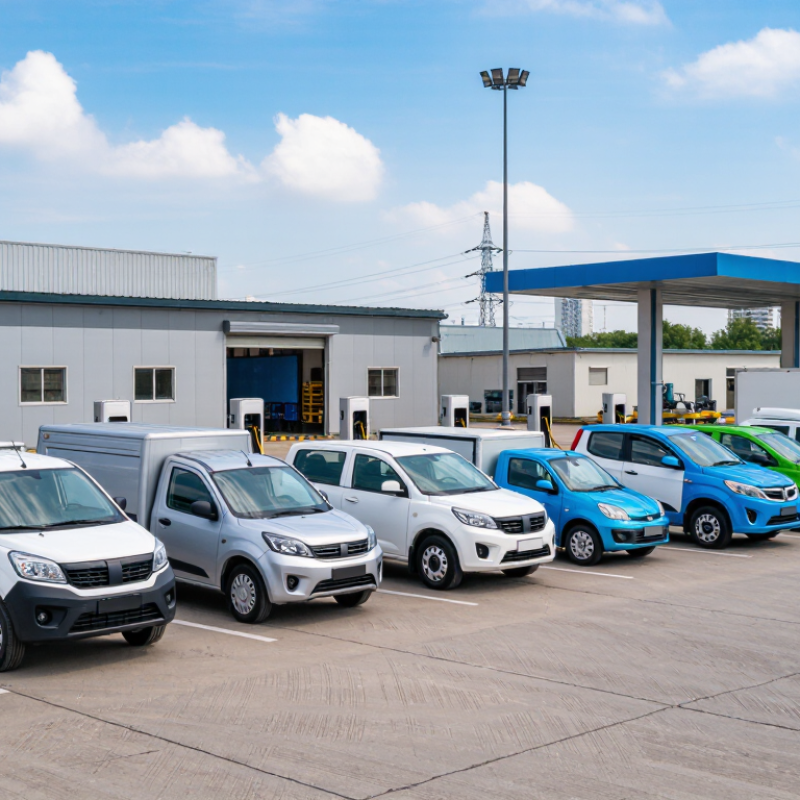
What Defines an Electric Utility Vehicle Supplier in China?
What Defines an Electric Utility Vehicle Supplier in China?
An electric utility vehicle supplier does more than assemble a battery-powered vehicle. It must understand payloads, terrain, duty cycles, charging access, and maintenance needs. A warehouse shuttle, airport cart, and agricultural carrier require different engineering choices. That distinction matters when comparing China’s leading suppliers.
The China Association of Automobile Manufacturers reported 9.5 million new-energy vehicle sales in 2023, representing 31.6% of total vehicle sales. The International Energy Agency also recorded nearly 8 million electric car sales in China during 2023. These figures show manufacturing depth, but they do not prove utility-vehicle capability. Buyers should request test records for loaded driving, braking, battery protection, and repeated charging. Ask for measurable payload data, not attractive brochure language.
A dependable supplier should provide battery traceability, clear warranty terms, spare-parts planning, and technician training. It should also adapt voltage, cabin layout, tires, and software to the working site. Field experience matters here. A vehicle that performs well on a paved test route may struggle on wet ramps or uneven farm roads. No supplier is perfect. Some published range figures also reflect controlled conditions, not winter traffic or heavy loads. The IEA’s Global EV Outlook 2024 supports careful evaluation, while real operating trials reveal the details that reports cannot. Reliability begins with evidence, not promises.
| Rank | Anonymous Supplier Profile | Primary Utility Vehicle Segment | Typical Payload Capacity | Typical Driving Range | Battery Chemistry Options | Charging Configuration | Customization Capability | Export & Compliance Support | Typical Warranty | Supplier Evaluation Score |
|---|---|---|---|---|---|---|---|---|---|---|
| 1 | Profile 01 High-volume manufacturer | Electric cargo vans and light-duty delivery vehicles | 800–1,500 kg | 180–350 km per charge | Lithium iron phosphate; selected lithium-ion configurations | AC overnight charging; optional DC fast charging | High: cargo bodies, seating, telematics, refrigerated conversions | Strong documentation capability; export homologation support available | 3 years or 100,000 km, subject to contract | 9.3 / 10 |
| 2 | Profile 02 Commercial fleet specialist | Electric light trucks and urban distribution vehicles | 1,000–2,000 kg | 160–300 km per charge | Lithium iron phosphate | AC charging; optional DC charging and depot solutions | High: wheelbase, cargo box, tail lift, suspension and cabin options | Experienced with fleet tenders and international shipping documents | 3 years or 100,000 km, subject to contract | 9.1 / 10 |
| 3 | Profile 03 Municipal vehicle supplier | Electric sanitation, maintenance and public-service vehicles | 500–1,500 kg | 100–250 km per charge | Lithium iron phosphate; lead-acid on entry-level models | AC charging; removable battery options on compact models | Very high: sweepers, bins, water tanks, tool bodies and service equipment | Can provide technical files, operator manuals and spare-parts packages | 12–36 months, depending on vehicle system | 8.9 / 10 |
| 4 | Profile 04 Low-speed utility specialist | Golf carts, campus vehicles and compact transporters | 300–800 kg | 80–180 km per charge | Lead-acid; lithium iron phosphate upgrade | Standard AC plug-in charging | High: passenger seating, cargo beds, roofs, doors and safety accessories | Suitable for off-road, private-site and selected export applications | 12–24 months, subject to battery type | 8.6 / 10 |
| 5 | Profile 05 Warehouse and logistics supplier | Electric flatbed trucks and factory transporters | 500–2,000 kg | 100–220 km per charge | Lithium iron phosphate; lead-acid alternatives | AC charging; battery-swapping configurations available | High: platform length, side rails, hydraulic equipment and cabin design | Strong industrial-use documentation; local road approval varies by market | 12–36 months, subject to component coverage | 8.5 / 10 |
| 6 | Profile 06 Agricultural utility supplier | Electric farm carts, orchard vehicles and utility carriers | 500–1,500 kg | 80–200 km per charge | Lithium iron phosphate; lead-acid for basic configurations | AC charging; optional solar-assisted or removable battery systems | Very high: dump beds, sprayers, trailers, farm tools and protective structures | Usually supports commercial invoices, packing lists and basic technical files | 12–24 months, subject to operating environment | 8.3 / 10 |
| 7 | Profile 07 Tourism and resort vehicle supplier | Electric shuttle buses and passenger utility carts | 6–14 passengers or 500–1,200 kg | 80–180 km per charge | Lithium iron phosphate; lead-acid options | AC charging; fleet charging stations available | High: seating layouts, weather protection, doors, luggage racks and lighting | Best suited to resorts, campuses, airports and controlled private sites | 12–24 months, subject to battery package | 8.1 / 10 |
| 8 | Profile 08 Electric three-wheeler specialist | Three-wheel cargo vehicles and last-mile utility transporters | 300–1,000 kg | 80–200 km per charge | Lead-acid; lithium iron phosphate upgrade | AC charging; removable battery configurations available | Medium to high: cargo box, canopy, rear axle and body configuration | Efficient for containerized export; road legality must be checked by destination | 12–24 months, subject to vehicle category | 7.9 / 10 |
| 9 | Profile 09 Special-purpose body builder | Electric mobile workshops, inspection vehicles and service units | 500–1,500 kg | 100–250 km per charge | Lithium iron phosphate | AC charging; auxiliary power and inverter systems available | Very high: bespoke bodywork, storage, lifting and electrical systems | Strong project engineering; certification scope depends on final conversion | 12–36 months, negotiated by subsystem | 7.8 / 10 |
| 10 | Profile 10 Small-batch OEM/ODM supplier | Compact electric utility vehicles for niche applications | 300–1,000 kg | 80–180 km per charge | Lithium iron phosphate; lead-acid options | AC charging; optional battery and charger configurations | High: private-label bodywork, color, controls and accessory packages | Flexible OEM/ODM support; buyer should verify testing and certification records | 12–24 months, subject to order terms | 7.6 / 10 |