Choosing the best UPS backup power supply in 2026 requires more than comparing battery capacity or online prices. Global buyers face different voltage standards, plug designs, climates, service networks, and warranty conditions. A unit designed for a 120-volt office may not suit a 230-volt workshop. That detail matters.
This guide evaluates UPS systems through practical criteria, including pure sine-wave output, transfer time, battery chemistry, runtime, surge protection, noise, monitoring, and replacement support. A small office may need reliable protection for a router, desktop computer, and payment terminal. A server room may require scalable capacity, network alerts, bypass controls, and generator compatibility. Every environment has different risks.
Real performance can differ from the product sheet. Published runtime often assumes a new battery and moderate temperature. Dust, heat, aging cells, and frequent outages may reduce it. We will examine those limitations instead of presenting one universal winner. That is not always convenient.
The strongest 2026 choices should balance technical performance, ownership cost, safety, and dependable regional support. Buyers should also check local electrical requirements and installation guidance before purchase. A lower-priced model can become expensive when batteries, adapters, or repairs are difficult to obtain. This comparison aims to help distributors, businesses, and households make informed decisions with clearer expectations. Reliability is measured during the outage, not only on the sales page.
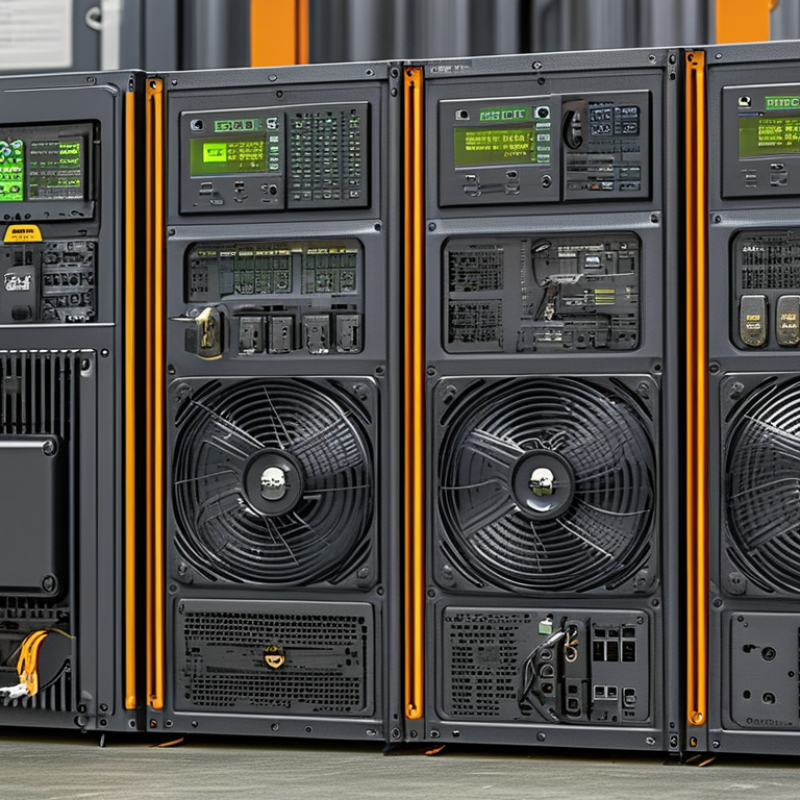
A UPS, or uninterruptible power supply, sits between the electrical source and critical equipment. It detects voltage loss, sags, surges, and frequency changes. Its battery and inverter provide temporary, conditioned power. That short bridge keeps servers running while generators start or systems shut down safely. It is not a generator. It is a controlled buffer.
The IEA’s Electricity 2024 report estimates that data centers used about 460 TWh globally in 2022. Demand could exceed 1,000 TWh by 2026. More digital load means greater exposure to grid interruptions. Uptime Institute’s 2024 outage analysis also identifies power problems among the leading causes of data-center outages. For global buyers, UPS selection is an operational decision, not merely an electrical purchase.
Conditions vary sharply between regions. A factory in Southeast Asia may face brownouts, while a clinic in a cold region may need longer battery autonomy. Check input voltage, frequency, phase, outlet standards, and local service capacity.
Online double-conversion systems suit sensitive equipment. Line-interactive models may fit smaller loads. Neither option is universally best. Calculate real watts, not only VA. Include starting currents, future expansion, and battery aging.
A ten-minute runtime target can become six minutes after heat and neglect. This is where plans often fail. Battery temperature, ventilation, replacement intervals, and bypass design need written testing. IEC 62040 compliance helps, but certificates alone cannot guarantee site performance.
For global buyers, the best UPS depends less on advertised capacity than on topology, load behavior, and runtime evidence. Standby units suit basic office equipment, while line-interactive designs handle moderate voltage variation. Online double-conversion UPS systems provide cleaner power for servers, medical devices, and industrial controls. They also create more heat and may reduce efficiency. The trade-off is easy to miss.
Power ratings need careful interpretation. VA is not the same as watts. A 10 kVA UPS with a 0.9 power factor supports about 9 kW, before derating. Leave 20–30% headroom for startup surges and future equipment. The Uptime Institute’s 2024 Annual Outage Analysis shows that power-related failures remain a major cause of serious data-center incidents, reinforcing the need for realistic load planning. Bigger is not automatically safer.
Battery runtime should be measured at the actual load, not copied from a brochure’s maximum figure. Runtime falls as batteries age, temperatures rise, or extra battery cabinets are added incorrectly. The Ponemon Institute’s 2022 Cost of Data Center Outages report placed the average outage cost at about $740,357, although newer sites may experience very different losses. Test transfer behavior, alarm visibility, bypass operation, and shutdown communication. A five-minute runtime may protect a server, but it may not finish a controlled shutdown. That assumption deserves review.
2026 Best UPS Backup Power Supply for Global Buyers?
For homes, the right UPS should match both wattage and daily habits. Measure your router, computer, monitor, and storage devices under normal use. A unit with automatic voltage regulation can correct small voltage drops without using battery power. This usually extends battery life. For global buyers, check input voltage, frequency, outlet design, and local certification requirements. A model that works well in one country may not suit another electrical system. I once underestimated printer startup demand, and the UPS overloaded immediately. That mistake reinforced one practical rule: calculate peak load, not just average consumption.
Offices need quieter operation, longer runtime options, and dependable monitoring. A network interface can alert administrators before batteries fail. For critical equipment, choose pure sine wave output, fast transfer time, protected bypass, and scalable battery support. Medical, laboratory, and industrial systems may also require redundancy and professional installation. Runtime charts are useful, but real performance changes with battery age, room temperature, and load patterns. Specifications alone are not enough. Test the system during controlled maintenance windows.
Tips: Keep the UPS ventilated and leave spare capacity. Replace batteries according to tested condition, not habit. Label every connected device by priority. Avoid plugging laser printers into battery-backed outlets. Review alarms monthly. One overlooked issue is maintenance access; a perfect UPS becomes unreliable when nobody can safely inspect it.
Which UPS features matter for homes, offices, and critical equipment?
| UPS Category | Typical Capacity | Power Protection | Typical Transfer Time | Output Waveform | Typical Runtime at 50% Load | Best-Fit Applications |
|---|---|---|---|---|---|---|
| Standby / Offline | Approximately 300–1,500 VA | Basic battery backup and surge protection | Typically 2–10 ms | Stepped approximation or sine wave, depending on model | Approximately 5–15 minutes | Home routers, monitors, basic desktop computers, and small networking devices |
| Line-Interactive | Approximately 500–3,000 VA | Battery backup, surge protection, and automatic voltage regulation | Typically 2–10 ms | Pure sine wave or stepped approximation | Approximately 5–20 minutes | Office workstations, point-of-sale systems, small servers, NAS devices, and telecom equipment |
| Online Double-Conversion | Approximately 1–10 kVA for single-phase systems | Continuous voltage and frequency regulation with electrical isolation from many input disturbances | Zero transfer time for connected equipment | Pure sine wave | Approximately 5–15 minutes with standard batteries; longer with external battery packs | Medical electronics, industrial controls, storage systems, sensitive servers, and critical communications |
| Three-Phase Online | Approximately 10–500 kVA or higher | Continuous conditioning, regulated three-phase output, bypass capability, and scalable battery support | Zero transfer time in normal double-conversion operation | Pure sine wave | Site-specific; commonly 5–15 minutes with standard battery cabinets | Data centers, manufacturing systems, large healthcare facilities, and enterprise infrastructure |
| Buyer / Equipment | Recommended UPS Type | Most Important Features | Suggested Design Margin | Useful Monitoring | Battery Considerations |
|---|---|---|---|---|---|
| Home office and broadband equipment | Standby or line-interactive | Sufficient watt capacity, low noise, USB charging, surge protection, and compact size | Keep normal load at no more than about 70–80% of the UPS watt rating | Battery status, overload warning, estimated runtime, and automatic shutdown | Replaceable sealed lead-acid batteries are common; lithium models can reduce weight and maintenance |
| Office workstations and network storage | Line-interactive with pure sine wave output | Pure sine wave, automatic voltage regulation, USB or network management, and replaceable batteries | Allow at least 20–30% capacity headroom for startup demand and future equipment | Graceful operating-system shutdown, event logs, remote alerts, and load measurement | Confirm battery availability, replacement procedure, and expected service life before purchase |
| Servers and critical IT equipment | Online double-conversion | Zero transfer time, pure sine wave, high efficiency, bypass mode, and network management | Target approximately 60–75% of rated watt capacity during normal operation | SNMP or web monitoring, temperature alarms, battery health, load percentage, and shutdown control | Use external battery modules when runtime requirements exceed the standard internal battery duration |
| Medical, laboratory, and industrial controls | Online double-conversion, subject to local compliance requirements | Pure sine wave, stable frequency, low output distortion, isolation options, bypass, and documented alarms | Use the equipment manufacturer's electrical requirements; do not size only by nameplate VA | Continuous event logging, remote alarm contacts, environmental monitoring, and maintenance notifications | Verify battery chemistry, ventilation, temperature limits, inspection intervals, and replacement safety procedures |
| Data centers and large facilities | Three-phase online or modular online UPS | Scalability, redundancy, bypass, high efficiency, parallel operation, service access, and predictable maintenance | Engineer for current load, growth, redundancy strategy, and generator compatibility | Centralized monitoring, power-quality records, capacity planning, alarms, and integration with facility management systems | Select battery autonomy from the generator start time, controlled shutdown plan, and required service continuity |
Note: Capacity, transfer time, waveform, efficiency, runtime, input-voltage range, outlet configuration, and certifications vary by model and regional electrical system. Confirm the required voltage, frequency, plug type, safety certification, and actual load before ordering.
Choosing the best UPS for global buyers starts with regional power standards, not battery capacity.
A unit designed for 230V/50Hz may not suit a 120V/60Hz site. Confirm input voltage, output voltage, frequency, plug type, earthing, and bypass requirements before purchase. IEC 62040-1 addresses UPS safety, while IEC 62040-2 covers electromagnetic compatibility. Local certification may also require national approval, such as electrical safety or radio-frequency compliance.
Reliability deserves equal attention.
Uptime Institute’s 2024 Global Data Center Survey reported that power-related problems remain a leading cause of outages. That finding matters for offices, factories, hospitals, and remote facilities.
Review the UPS topology, transfer time, battery chemistry, overload rating, and maintenance access.
Online double-conversion systems provide tighter voltage control, but they often consume more energy. The IEA’s Electricity 2024 analysis also highlights rapidly rising data-center electricity demand, making efficiency increasingly important. A lower-efficiency UPS can quietly increase operating costs.
Tips:
Request test reports, certification documents, efficiency curves, and regional service details. Check whether replacement batteries are locally available. A practical site survey is still essential.
Many selection mistakes begin with incomplete load data. Measure real operating loads, not only nameplate ratings, and leave expansion capacity for future equipment. Even experienced buyers can overlook neutral wiring, generator compatibility, or extreme ambient temperatures. These small details may decide whether the UPS performs reliably during a real outage.
2026 Best UPS Backup Power Supply for Global Buyers?
A reliable UPS should protect people, equipment, and operating budgets. Safety begins with compliance. Buyers should request test evidence for IEC 62040-1, electromagnetic compatibility under IEC 62040-2, and performance classification under IEC 62040-3. Local electrical codes still matter. A certificate alone is not enough.
Maintenance records reveal practical reliability. Check battery chemistry, replacement intervals, ventilation needs, bypass procedures, and remote alarms. The Uptime Institute’s 2024 Global Data Center Survey reported that human error remained a major contributor to outages. Clear maintenance access can reduce that risk. Small details matter. A technician should reach the battery cabinet without moving energized equipment. I would also verify alarm logs during a site visit, not only read a product brochure.
Warranty terms deserve careful comparison. Confirm coverage for batteries, labor, shipping, firmware, and operating temperatures. Some warranties exclude frequent discharge cycles or poor ventilation. That can become expensive. Uptime Institute’s 2023 Annual Outage Analysis found that more than half of reported outages caused over 100,000 dollars in direct losses. Therefore, total cost of ownership should include downtime exposure, electricity losses, battery disposal, inspections, spare parts, and technician travel. The U.S. Department of Energy notes that higher-efficiency power systems can reduce data-center energy consumption, but efficiency claims require comparable test conditions. A cheaper UPS may still cost more over eight years. That is easy to overlook.
Recommended evaluation weighting for UPS safety, maintenance, warranty, and total cost of ownership.
Safety receives the highest weighting because buyers should verify applicable IEC 62040 requirements, electrical protection, overload handling, and installation safety. Maintenance and TCO cover battery replacement, service access, energy efficiency, and downtime risk, while warranty evaluates coverage duration, battery terms, and international support conditions. These percentages are a practical procurement framework rather than a brand ranking.