China Best Battery Store for Global Buyers?

Choosing the best battery store in China requires more than comparing prices or reading polished product pages. Global buyers need dependable cells, clear specifications, and support that remains useful after payment.

A trusted battery store should provide chemistry details, rated capacity, cycle-life data, production dates, and safety test reports. Buyers should also check whether the supplier explains UN38.3 transport testing, IEC standards, warranty terms, and responsible shipping procedures. These details matter when batteries travel across borders or power equipment in demanding environments. A low price can become expensive after inconsistent capacity, damaged packaging, or slow technical support.

Professor John B. Goodenough, a pioneer of lithium-ion battery technology, once said, “I am not a battery expert. I am a solid-state physicist.” His modest statement offers a useful reminder: battery purchasing needs evidence, not confident labels. Even experienced buyers can miss differences between nominal capacity and usable capacity. I have seen product comparisons focus heavily on cost while overlooking temperature performance and after-sales communication.

The strongest Chinese suppliers usually combine manufacturing experience with transparent documentation. They may offer lithium-ion, LiFePO4, lead-acid, or specialized battery systems for different applications. However, “best” depends on the buyer’s voltage, current, operating temperature, delivery region, and compliance needs. No single battery store fits every project. A careful introduction should compare verified performance, seller reliability, and practical service rather than promise perfection. There is room for doubt. That is healthy. It encourages buyers to request samples, review test records, and confirm specifications before placing larger orders.
China Best Battery Store for Global Buyers?

What Makes China a Leading Battery Source for Global Buyers?

What Makes China a Leading Battery Source for Global Buyers?

China has become a major battery source because its supply chain is broad, fast, and highly coordinated. Cell makers, pack assemblers, material suppliers, testing labs, and logistics firms often operate within the same industrial region. This reduces waiting time and simplifies technical communication. Buyers can request lithium-ion packs for tools, mobility devices, backup systems, and other approved applications. Custom voltage, capacity, connectors, enclosures, and protection settings are commonly available. Small changes can be tested quickly.

Practical sourcing still requires careful verification. A professional supplier should provide clear specifications, safety data, test reports, and production records. Relevant transport and product requirements must be checked for each destination. Factory audits, sample testing, and battery management system reviews can reveal problems before mass production. Reliable suppliers also explain cell origin, warranty limits, charging conditions, and expected service life. Good documentation matters.

The process is not flawless. A low quotation may hide weaker cells, loose quality control, or unclear after-sales support. I have seen projects delayed because a sample passed basic checks but failed during repeated cycling. That experience changed how I evaluate suppliers. Price is only one part of value. Communication, traceability, testing discipline, and realistic delivery promises deserve equal attention. China offers strong manufacturing depth, but buyers still need independent judgment.

How to Identify the Right Battery Store in China

Choosing the right battery store in China requires more than comparing online prices. A dependable seller should explain cell origin, production dates, chemistry, capacity, and protection features clearly. Ask for evidence. Request recent capacity test reports, safety documents, and transport records before discussing large orders. Product labels should match the paperwork, including voltage, watt-hours, model numbers, and batch information.

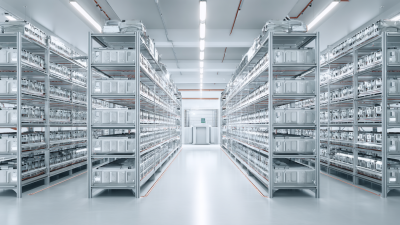
Visit the warehouse by video if travel is difficult. Check whether batteries are stored in dry, organized areas with clear separation between tested and untested goods. A professional team should answer technical questions without avoiding details. Ask how they manage quality inspections, defective units, packaging, and after-sales support. The sales contact may not be the engineer, so request a direct technical discussion.

Order samples from the same production batch planned for bulk delivery. Test actual capacity, charging behavior, temperature changes, connectors, and the battery management system. Do not rely only on a polished sample. A checklist helps, but it cannot predict every delay or communication problem. I would also compare response times and written explanations, not only quotations. The cheapest store may become expensive when documents change, cartons arrive damaged, or replacement terms remain vague. Clear records matter. Use a written purchase agreement covering specifications, inspection standards, delivery terms, and acceptable tolerances. Reflect after the sample stage. If answers still feel uncertain, pause before scaling the order.

Which Battery Types and Applications Are Available?

A reliable battery store for global buyers should offer more than a long product list. It should match chemistry, voltage, cycle life, and operating conditions to each application. Lithium-ion batteries dominate electric vehicles and portable equipment because they provide high energy density. LFP cells suit buses, forklifts, and stationary storage because they offer strong thermal stability and long cycle life. NMC cells remain useful where lighter weight and higher energy density matter. Lead-acid batteries still serve backup power, alarm systems, and vehicle starting duties. Sodium-ion batteries are emerging for lower-cost storage, although their market maturity needs careful review.

Demand is expanding quickly. The International Energy Agency’s Global EV Outlook 2024 reported nearly 14 million electric car sales in 2023. Its Batteries and Secure Energy Transitions report projected battery demand could grow sixfold by 2035. Applications now include electric cars, commercial vehicles, solar storage, telecom backup, data-center UPS systems, marine equipment, and low-speed mobility. In practice, buyers often focus on capacity first. That can be a mistake. Temperature range, charging speed, protection systems, certifications, and replacement support affect real performance. A spreadsheet cannot reveal every field problem.

Tips: Ask for cell specifications, test reports, safety documentation, warranty terms, and sample results. Confirm whether capacity is rated at 25°C or under your actual conditions. Check shipping limits and local compliance before ordering. Do not compare prices without comparing usable energy and cycle-life testing. I have seen “long-life” claims become unclear after one missing test condition. That detail deserves challenge.

China Best Battery Store for Global Buyers? — Battery Types and Applications

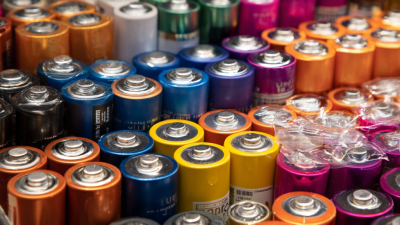
The chart compares typical nominal voltage per cell for widely used rechargeable and primary battery chemistries. Actual battery-pack voltage depends on the number of cells connected in series.

Lead-acid: Automotive starting, backup power, mobility and solar storage.
Nickel-based: Power tools, emergency equipment, industrial and hybrid applications.
Lithium-ion: Consumer electronics, electric vehicles, e-bikes and energy storage.
Zinc-carbon: Low-drain household devices such as clocks, remotes and flashlights.

How to Evaluate Quality, Certification, and Supplier Reliability

China Best Battery Store for Global Buyers?

Choosing a battery store in China should begin with evidence, not attractive pricing. In supplier reviews, I ask for traceable cell records, production dates, and test samples from the same batch. A good supplier explains chemistry, capacity tolerance, cycle-life conditions, and storage limits clearly. Ask how capacity is measured. The answer matters. A rating without temperature, discharge current, or cutoff voltage proves little. Inspect labels, terminals, welds, insulation, and packaging. Small defects can become costly during transport or installation.

Certification must match the battery type and destination. Request current documents for transport, safety, and environmental requirements, including UN 38.3 test evidence where applicable. Check model numbers, testing laboratories, issue dates, and exact product configurations. A certificate for one cell does not automatically cover a complete battery pack. This mistake is common. Independent pre-shipment testing can verify voltage, capacity, internal resistance, and protective functions. Keep retained samples and photos linked to batch numbers. Testing cannot replace factory audits.

Supplier reliability appears in ordinary conversations. Do they answer technical questions directly? Can they explain failure rates and warranty exclusions? Ask for lead times, replacement procedures, and spare-part policies in writing. Visit the facility when possible, or use a qualified third-party auditor. I would place a small pilot order before committing to volume. It may feel slow. It reduces surprises. My own checks are not perfect. Processes can change after approval. Recheck documents and sample performance before every major order.

What Should Global Buyers Know About Pricing, Shipping, and Support?

China Best Battery Store for Global Buyers?

Price is often the first concern, but the lowest quote can hide important differences. Battery cost depends on cell grade, capacity, BMS quality, testing, and order quantity. Ask for a clear quotation with product specifications, packaging fees, and payment terms. A professional supplier should provide test reports, safety documents, and traceable production details. Compare equal products, not just final numbers.

Shipping needs closer attention. Battery transport may require approved packaging, special handling, and route-specific documents. Confirm the shipping method, delivery estimate, customs responsibilities, and insurance before payment. Duties and local clearance fees can change the real cost. A small order may also have a higher freight cost per unit. Get this in writing. That matters.

Support is where many buyers discover weaknesses. Ask how quickly technical questions receive answers. Check whether replacement parts, troubleshooting instructions, and warranty procedures are available. Clear photos, serial numbers, and test records can make a claim easier. I once treated fast replies as proof of quality, which was a poor assumption. Response speed matters, but technical accuracy matters more. A dependable store should explain limitations honestly, including temperature ranges, charging requirements, and expected service life. Some sellers provide impressive promises. The details deserve more trust.

China Best Battery Store for Global Buyers? — What Should Global Buyers Know About Pricing, Shipping, and Support?
Battery Product Category Common Chemistry Typical Export Price Range Typical Minimum Order Estimated Production Lead Time Typical Shipping Method Approximate Transit Time Key Documents and Compliance Checks Expected Support Level
Cylindrical Battery Cells Nickel-manganese-cobalt or lithium iron phosphate US$1.20–4.50 per cell 500–2,000 cells 7–20 days for stocked items; 20–45 days for custom orders Sea freightAir freight for eligible shipments Sea: 25–45 days
Air: 5–12 days
UN 38.3 test summary, Safety Data Sheet, cell specification, packing declaration, invoice, and packing list Basic technical specification and pre-shipment inspection; after-sales support varies by seller
Prismatic LFP Battery Cells Lithium iron phosphate US$65–120 per kWh 100–500 cells or 1–5 pallets 10–30 days for standard grades; 30–60 days for custom production Sea freightRail for selected routes Sea: 25–50 days
Rail: 18–35 days
UN 38.3, IEC 62619 where applicable, capacity and internal-resistance test records, SDS, and transport documents Batch testing, lot traceability, and technical support are commonly available for commercial orders
Residential Energy Storage Battery LFP battery pack with battery-management system US$110–210 per kWh 5–20 systems 20–45 days Sea freightDangerous-goods handling 30–55 days, depending on destination and customs clearance UN 38.3, IEC 62619 or equivalent product testing, EMC documents, installation manual, SDS, and country-specific grid requirements Remote troubleshooting, installation guidance, firmware assistance, and a typical 3–5 year warranty option
Commercial and Industrial Battery Cabinet LFP battery modules with integrated BMS and thermal management US$150–280 per kWh 1–5 cabinets 30–75 days Sea freightProject logistics 35–70 days, including port and inland delivery UN 38.3, IEC 62619, electrical diagrams, fire-safety documentation, SDS, commissioning procedures, and local certification where required Pre-sales system design, commissioning support, remote monitoring assistance, spare-parts planning, and project documentation
Electric Vehicle Battery Module LFP or nickel-manganese-cobalt US$90–180 per kWh 10–50 modules 25–60 days Sea freightSpecialized dangerous-goods transport 30–60 days UN 38.3, SDS, module electrical data, traceability records, packaging certification, and vehicle or machinery integration requirements Integration guidance is usually available; vehicle-specific engineering and warranty terms must be agreed in writing
Portable Power Station LFP or lithium-ion battery pack with inverter US$180–500 per unit 20–100 units 15–35 days Sea freightAir freight subject to carrier approval Sea: 25–45 days
Air: 5–15 days
UN 38.3, SDS, user manual, charger specifications, EMC and electrical-safety reports, and destination-market labeling Usually includes user manuals, software or firmware guidance, replacement-part procedures, and a 1–3 year warranty option
Custom Battery Pack Specified according to voltage, capacity, size, and application US$130–300 per kWh before engineering fees 50–500 packs after prototype approval Prototype: 20–45 days
Mass production: 30–90 days
Sea freight for productionAir freight for prototypes Prototype air: 5–15 days
Production sea: 25–55 days
UN 38.3, SDS, electrical drawings, BMS communication protocol, test plan, quality agreement, and destination-market certification Highest support potential, including design review, sample testing, engineering changes, quality reports, and warranty negotiation
Important pricing and shipping note: The ranges above are indicative China export-market benchmarks for standard lithium battery products and are normally quoted before import duty, value-added tax, destination customs charges, insurance, inland delivery, certification fees, and battery-specific dangerous-goods surcharges. Final pricing depends on chemistry, usable capacity, cell grade, order volume, Incoterms, packaging, certification, and payment terms.
Buyer verification checklist: Request a current UN 38.3 test summary, Safety Data Sheet, product specification, batch test report, warranty terms, Incoterm, shipping classification, production schedule, and clear responsibility for customs clearance before placing an order. Transit times are planning estimates rather than guaranteed delivery dates.