China’s battery sector is central to the global energy transition, but scale alone does not make a supplier the right choice. The International Energy Agency’s Global Supply Chains of EV Batteries 2024 report estimates that China held nearly 85% of global battery cell manufacturing capacity. SNE Research reported that global electric-vehicle battery usage reached about 1,055 GWh in 2024. CATL supplied 37.9% of that total, while BYD supplied 17.2%. These figures show concentration, not a guarantee of suitability. They also describe different measures: manufacturing capacity and batteries installed in vehicles.
This guide to China’s top 10 battery suppliers gives global buyers a starting point for comparing companies. It considers product range, manufacturing scale, chemistry options, export experience, and support after delivery. Buyers should also check project-specific evidence, such as test documentation, production lead times, traceability, and warranty terms. A polished brochure is not proof of dependable performance. Neither is a large market share. Battery supply can be disrupted by changing demand, material constraints, or shipping delays, so a second-source plan deserves attention. The rankings should therefore be treated as a shortlist, not a final procurement decision. Supplier data changes, and public sources do not always use the same definitions. That caveat matters. A careful comparison can help buyers ask sharper questions before committing to a long-term partnership.
China’s battery industry is more than a large manufacturing base. It connects mineral processing, active materials, cell production, and pack assembly. The International Energy Agency’s Global EV Outlook 2024 estimates that China held about 85% of global battery-cell manufacturing capacity in 2023. It also accounted for roughly 90% of cathode active material production and 97% of anode active material production. These figures show where much of the supply-chain capacity sits. They do not mean every input originates there.
This concentration helps global buyers source cells and components at scale, supported by established processing networks and industrial clusters. Yet the chain crosses borders: raw materials may be mined in one country, refined in another, then made into cells elsewhere. Shipping distance, qualification tests, and production yields all affect landed cost. Small delays matter.
For sourcing teams, the useful question is not simply who offers the lowest quoted price. Check cell chemistry, cycle-life test conditions, traceability, capacity allocation, and consistency between production batches. IEA data describe industry capacity, not each factory’s usable output or delivery reliability. That distinction is easy to miss. A spreadsheet can look precise while actual production remains uneven. Buyers should treat supply concentration as both an advantage and a dependency.
Approximate Chinese shares of global battery-related manufacturing capacity in 2021
China’s strong position across battery cells and key components makes it a central node in global battery supply chains. The figures are rounded estimates; cell manufacturing refers to capacity, while cathode and anode figures refer to production.
Source: International Energy Agency, Global Supply Chains of EV Batteries (2022), reporting 2021 estimates.
China Top 10 Battery Suppliers for Global Buyers: How to Evaluate Chinese Battery Suppliers
Supplier evaluation should begin with evidence, not a low quotation. The International Energy Agency’s Global EV Outlook 2024 estimates that China held nearly 85% of global battery-cell manufacturing capacity in 2023. Scale is substantial, but it does not guarantee consistent quality or reliable delivery. Ask suppliers for recent production data, defect rates, capacity utilization, and documented quality-control procedures. Check whether reported figures cover the actual factory and product you are buying. Paperwork can look complete. Verify it.
Assess samples under conditions close to your intended use. Record capacity, cycle performance, temperature behavior, and batch-to-batch variation through independent testing where practical. The IEA’s Global Critical Minerals Outlook 2024 reports that China produces nearly 90% of cathode active materials and over 97% of anode active materials. This concentration makes traceability and backup sourcing worth discussing. Request material-origin records, warranty terms, and a clear process for handling rejected batches. A polished audit file may still leave questions about day-to-day controls; factory visits and follow-up checks can expose gaps. No single certificate or test settles the decision. Compare evidence across suppliers, and document what remains uncertain.
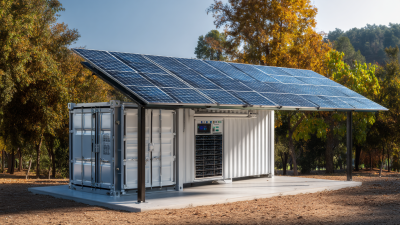
China’s battery supply base includes manufacturers with different cell formats, production scales, and technical strengths. These ten profiles highlight capabilities global buyers can compare; they are not a verified ranking. Supplier One focuses on cylindrical cells for portable equipment. Supplier Two develops prismatic formats for energy storage. Supplier Three offers pouch-cell production, where weight and flexible dimensions matter. Supplier Four serves electric mobility projects and may support pack integration. Supplier Five specializes in stationary storage, including containerized systems. Check the actual product range.
Supplier Six emphasizes automated production and repeatable quality checks. Supplier Seven works with customized battery packs for industrial tools and equipment. Supplier Eight serves smaller orders, which can help during product development. Supplier Nine offers engineering support for thermal management, wiring, and enclosure design. Supplier Ten focuses on export coordination and documentation. These descriptions are starting points, not proof of a supplier’s current capacity or performance.
A plant visit can reveal details a catalogue misses: cell traceability, inspection stations, and how staff handle rejected units. Request recent test records, sample units, and clear warranty terms. Verify certifications against the exact model and destination market. Ask about production lead times during peak demand. Small details matter. Specifications can change between batches, and buyers should confirm them in writing before placing orders. I would also compare sample results with the supplier’s stated capacity; that step takes time, but skipping it can leave gaps.
Anonymized market profiles; rows are not a verified company-by-company ranking. Product mix and specifications vary by supplier. Request current technical documents and test evidence before qualification.
| No. | Supplier Profile | Typical Products | Common Chemistry or Format | Typical Applications | Buyer Checks |
|---|---|---|---|---|---|
| 1 | Electric-vehicle cell producer | Rechargeable traction cells and, in some cases, battery packs | LFP or NMC; commonly prismatic cells | Passenger electric vehicles and plug-in hybrid vehicles | Confirm cell-level specifications, cycle-life test conditions, warranty terms, traceability, and pack integration responsibilities. |
| 2 | LFP-focused battery supplier | Cells, modules, and battery systems | Lithium iron phosphate (LFP); prismatic formats are common | Electric vehicles, commercial vehicles, and stationary storage | Check usable energy, operating-temperature limits, charge-rate conditions, thermal-management requirements, and system-level safety documentation. |
| 3 | High-energy-density cell supplier | Power cells designed for applications with demanding energy or power targets | NMC and other lithium-ion chemistries; format varies | Electric vehicles and selected high-performance equipment | Compare energy density using the same measurement basis. Review abuse-test results, degradation data, and any restrictions on charging or operating conditions. |
| 4 | Cylindrical-cell manufacturer | Standardized cylindrical lithium-ion cells | Cylindrical; chemistry depends on the product line | Power tools, light electric mobility, and battery-pack assembly | Verify cell dimensions, capacity tolerance, discharge limits, batch consistency, and compatibility with the buyer’s pack design. |
| 5 | Pouch-cell manufacturer | Lightweight lithium-ion cells for custom or compact designs | Pouch format; commonly lithium-ion chemistries such as NMC | Consumer devices, mobility products, and selected vehicle systems | Assess swelling limits, packaging protection, mechanical support needs, cell aging data, and handling requirements during assembly. |
| 6 | Stationary-storage cell supplier | Large-format cells intended for stationary energy-storage systems | LFP is widely used in stationary lithium-ion storage; prismatic cells are common | Grid storage, renewable-energy storage, and commercial or industrial systems | Request system-relevant cycle-life data, warranted energy throughput, operating conditions, safety documentation, and end-of-life provisions. |
| 7 | Battery-pack and system integrator | Battery packs, battery-management systems, and system integration services | Uses cells sourced or produced for the required application | Industrial equipment, mobility, backup power, and storage projects | Clarify cell sourcing, BMS functions, enclosure rating, thermal design, system certification scope, software support, and service responsibilities. |
| 8 | Commercial-vehicle battery supplier | Traction batteries and packs designed for high-use vehicle duty cycles | LFP or NMC; pack design is application-specific | Buses, trucks, logistics vehicles, and other commercial transport | Check duty-cycle validation, fast-charging limits, vibration and environmental testing, fleet warranty coverage, and maintenance support. |
| 9 | Small-format battery supplier | Compact rechargeable cells and battery packs | Cylindrical, pouch, or prismatic lithium-ion formats | Consumer electronics, handheld devices, and portable equipment | Verify dimensions, connector and protection requirements, applicable product-safety documentation, capacity consistency, and shipping classification. |
| 10 | Industrial and specialty battery supplier | Application-specific batteries and replacement packs | Lithium-ion or other rechargeable chemistries, depending on use | Material-handling equipment, communications backup, and industrial systems | Match chemistry to the operating profile; confirm compatibility, maintenance needs, replacement availability, environmental limits, and end-of-life handling. |
For global buyers, compare suppliers by chemistry, production scale, and end use—not capacity claims alone. Lithium iron phosphate (LFP) often fits cost-sensitive fleets and stationary storage. Nickel-rich chemistries can provide higher energy density where vehicle space is limited. Neither is universally better. The International Energy Agency’s Global EV Outlook 2024 reports that electric-car battery demand exceeded 750 GWh in 2023, about 40% above 2022. That growth makes dependable output important, but reported capacity does not guarantee usable deliveries.
Scale should be checked against actual production, quality controls, and the ability to supply matching cells over time. Ask for application-specific test data, including cycle life, performance in cold conditions, and thermal stability. For grid storage, long service life and predictable output may matter more than compact size. For commercial vehicles, charging patterns and payload constraints can change the preferred chemistry.
The IEA’s Batteries and Secure Energy Transitions (2024) examines how concentrated battery supply chains affect resilience. Buyers should therefore review sourcing, production locations, and contingency plans alongside price. A less glamorous detail: sample performance may not reflect full-scale production. Independent validation helps expose that gap.
Selecting a Chinese battery supplier requires more than comparing quoted prices. Match cell chemistry, nominal voltage, capacity, discharge rate, and operating temperature to your equipment. Ask how each performance figure was measured. Cycle-life numbers mean little without details such as temperature, depth of discharge, and cutoff voltage. Small details matter.
Request recent, model-specific test reports and confirm that samples match the production specification. During evaluation, record dimensions, connector type, protection behavior, and capacity at a stated load. A factory visit or independent inspection can help verify process controls, incoming-cell checks, and batch traceability. If travel is impractical, request a live production walkthrough and dated records. Paperwork still cannot reveal every weakness.
Clarify minimum order quantities, lead times, warranty exclusions, replacement procedures, and responsibility for freight on defective units. Before booking cross-border delivery, confirm packaging and the carrier’s current documentation requirements. Keep one signed specification sheet for both approved samples and bulk orders. Buyers can focus heavily on price, then discover a connector change late. Details get missed. No checklist catches everything.